10 Working Days: Owners' Asbestos Survey Checklist Before Demolition
10 Working Days: Owners’ Asbestos Survey Checklist Before Demolition
Yes, almost every regulated demolition project needs a thorough asbestos survey before work begins, and the clock that matters most is the 10-working-day notification window. 40 CFR § 61.145 is the federal rule that triggers this requirement, and skipping it puts your permit, your schedule, and your crew’s safety at risk. The single next step: hire a qualified inspector now, because the notification period starts only after the survey is done.
TL;DR:
- A pre-demolition asbestos survey is legally mandated for most projects under federal and state regulations, regardless of when the building was constructed.
- The responsible party for ordering the survey and ensuring inspector qualifications must be the project owner or operator, not the contractor or tenant.
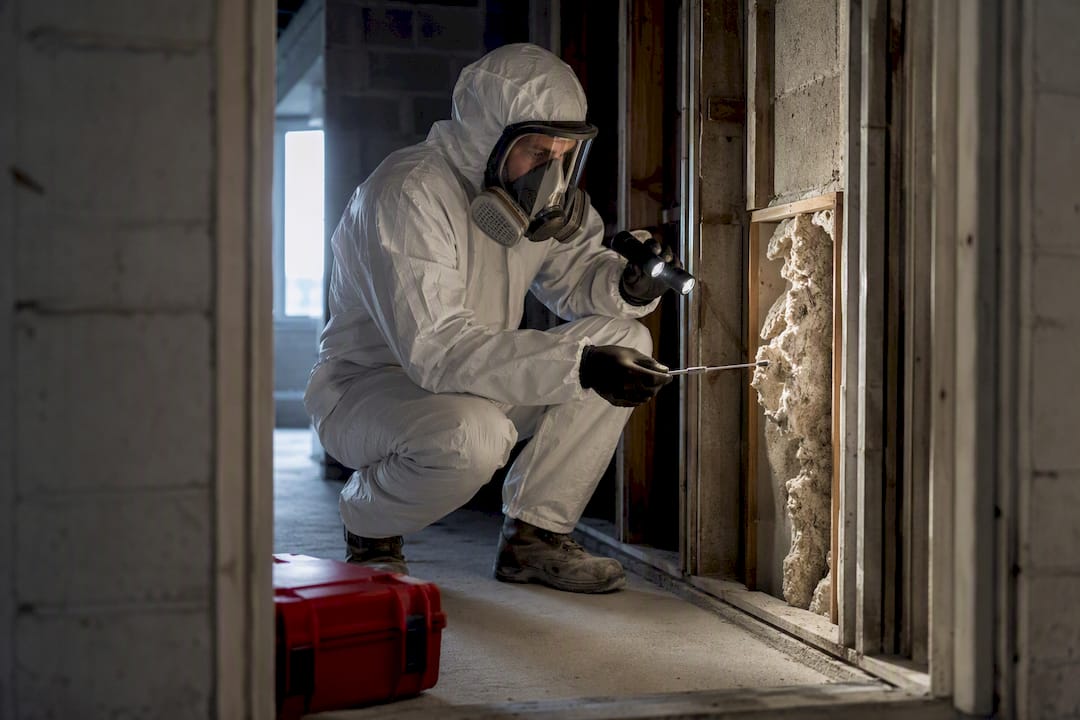
- A thorough survey includes document review, visual inspection, systematic sampling, and possibly destructive inspection to identify hidden asbestos materials.
- The 10-working-day notification period starts only after submitting complete survey results, so early planning is crucial to avoid project delays.
- Skipping or ignoring survey rules can result in hefty fines, project shutdowns, and serious liability for asbestos exposure.
Table of Contents
- Is an Asbestos Survey Before Demolition Legally Required?
- Who Has to Order the Survey, and Who’s Qualified to Do It?
- What a Pre-Demolition Survey Actually Covers
- What Counts as Regulated Asbestos and What Happens If You Find It
- The 10-Day Notification Rule and Building a Realistic Schedule
- Vetting an Inspector or Abatement Contractor Before You Sign
- What This Looks Like on a Real Job Site
- Clearing a Site After Demolition: What Verification Looks Like
- Staying Safe While the Survey and Demolition Happen
- What Happens If You Skip the Survey or Ignore the Rules
- Type 1, Type 2, and Type 3 Surveys: Which One Applies to Your Project
- Why Early Surveys Change the Whole Project, Not Just the Paperwork
- Working With Cornelius Wrecking on Your Next Demolition Project
- Where to Verify the Rules Yourself
- Sources
- FAQ
Is an Asbestos Survey Before Demolition Legally Required?
For most demolition activities covered by NESHAP, the answer is yes. 40 CFR § 61.145 requires a thorough inspection of the affected part of a facility before any demolition or renovation that disturbs building materials, and it applies whether the structure is a strip mall, a warehouse, or a single-family home slated for teardown.
Plenty of owners assume a building built after 1980 is automatically clear. It isn’t. State guidance, including Michigan EGLE’s asbestos inspection guidance, makes clear that construction date doesn’t exempt a building from inspection. Asbestos-containing products showed up in adhesives, caulks, and even some roofing materials well past the point most people think production stopped.
Several things push owners into this obligation:
- Any demolition or renovation that meets NESHAP’s regulated size or activity thresholds
- State and local rules that often layer on stricter notification or licensing rules than the federal floor
- Permitting offices in many jurisdictions that will not issue a demolition permit without survey documentation on file
The public-health logic behind this is simple: uncontrolled demolition of asbestos-containing material releases fibers into the air, and those fibers don’t stay on site. Regulators enforce the survey requirement because the exposure risk extends to neighbors, passersby, and the demolition crew itself.
Who Has to Order the Survey, and Who’s Qualified to Do It?
Responsibility lands on the owner or operator of the project, not the demolition contractor, not the tenant, and not whoever happens to be managing the permit paperwork. Under NESHAP, that’s the party 40 CFR § 61.145 holds accountable, and that accountability doesn’t transfer just because someone else signed a survey report.
Inspector qualifications vary by state, but a few things are consistent:
- The inspector should carry current asbestos inspector certification recognized by the state where the project sits
- Many states require a specific state license on top of federal training, separate from generic environmental consulting credentials
- The lab analyzing samples should carry accreditation for the analytical method used, typically Polarized Light Microscopy (PLM)
Pro Tip: Don’t treat a signed survey report as the finish line. Read it yourself, or have someone on your team read it, and check that every area a wrecking ball or excavator will touch actually got sampled. Owners who skip that step are the ones who get blindsided mid-demolition.
What a Pre-Demolition Survey Actually Covers
A compliant survey isn’t a walk-through with a clipboard. It’s a systematic sampling effort guided by recognized practice, and ASTM E2356-14 is the standard most state guidance points to for what “thorough” means in practice.
A complete inspection typically works through these steps:
- Document review of building age, prior renovation records, and any existing asbestos surveys
- Visual inspection of accessible areas, cataloging suspect materials by type and condition
- Bulk sampling of each distinct material type, collected according to a defined sampling protocol
- Laboratory analysis using PLM, with point-count analysis required when PLM shows asbestos at or below 1% to confirm the result rather than assume it
- Destructive inspection of areas a non-invasive walk-through can’t reach
The areas that trip up inexperienced surveys are the hidden ones:
- Wall and ceiling cavities behind finished surfaces
- Mechanical rooms, boiler insulation, and pipe wrap
- Roofing systems, including built-up roofing and flashing cement
- Flooring layers underneath the visible surface, including old mastic
- Fireproofing sprayed onto structural steel
Destructive inspection matters because a survey that only looks at what’s visible will miss material behind drywall or under flooring, and that’s exactly the material a demolition crew is about to expose. State guidance treats this as a requirement, not an option, whenever initial non-destructive work leaves gaps.
What Counts as Regulated Asbestos and What Happens If You Find It
Regulated Asbestos-Containing Material, or RACM, is the term that determines what has to come out before demolition starts. RACM includes friable material (anything that crumbles or can be reduced to powder by hand pressure) along with Category I and II non-friable ACM once it’s been damaged, sanded, or is likely to be crushed or pulverized during demolition, a distinction EPA’s guidance on asbestos-containing materials lays out clearly.
Most jurisdictions apply threshold amounts to decide what triggers formal removal requirements:
Most jurisdictions apply threshold amounts to decide what triggers formal removal requirements, including specific minimum lengths or areas of asbestos-containing materials that must be removed before demolition.
Not everything found automatically requires removal before the wrecking crew shows up. Non-friable Category I or II material that is unlikely to become friable during the planned demolition method, and material properly encased in concrete, can sometimes stay in place. But that exception has to be documented, not assumed, and the paperwork needs to show exactly why the material qualifies.
The 10-Day Notification Rule and Building a Realistic Schedule
The notification requirement is the piece that actually controls your calendar. 40 CFR § 61.145 requires written notice to the regulating agency at least 10 working days before demolition begins, and that clock doesn’t start until you’ve submitted a complete notification, survey results included.
A realistic project timeline looks something like this:
- Book the survey as early as possible, ideally during the design or bid phase
- Allow 3 to 5 business days for lab turnaround on bulk samples, longer if point-count analysis is needed
- Submit the NESHAP notification once results are in hand
- Let the 10-working-day waiting period run its full course
- Schedule abatement, if required, to finish before the demolition start date on your notification
Emergency demolitions, such as a structure at risk of imminent collapse, allow for shortened notice, but only with documentation supporting the emergency claim. That documentation needs to be airtight, because regulators scrutinize emergency exceptions closely.
Vetting an Inspector or Abatement Contractor Before You Sign
A cheap bid on a survey is often a red flag, not a deal. Incomplete sampling plans and vague scopes of work are the most common way owners end up with a report that doesn’t hold up when a permitting office or an OSHA inspector looks at it.
Before signing anything, verify:
- Current state licensing for both the inspector and the lab performing analysis
- General liability and pollution liability insurance, not just standard contractor coverage
- References from comparable demolition projects, not just renovation work
- A written sampling plan that specifies locations, material types, and analytical methods before work starts
Ask specifically whether destructive inspection is included in the scope, how disposal of sampled debris will be handled, and whether the report will meet the documentation standard your permitting agency expects. Vague answers to any of those questions are worth walking away from.
Pro Tip: Request survey reports in a format you can hand directly to demolition bidders. Complete, comparable scope information produces tighter, more accurate bids and cuts down on change orders once work is underway, a pattern EPA’s guidance on pre-demolition inspections backs up directly.
What This Looks Like on a Real Job Site
Reading the regulation is one thing. Coordinating survey, abatement, and demolition on an active site with a deadline is another. Some demolition contractors hold OSHA compliance training and asbestos abatement certifications that let the same team manage hazardous material handling and the wrecking work that follows.
Three problems show up again and again on real projects:
- Hidden ACM discovered mid-demolition, usually behind a wall or under flooring the original survey couldn’t reach without destructive inspection
- Late-arriving lab results that stall a notification submission and push the entire schedule
- Disposal logistics that get treated as an afterthought instead of being planned alongside the abatement scope
The fix in each case is the same: build destructive inspection into the survey scope from the start, order lab work early enough to absorb delays, and line up disposal before abatement begins rather than after.
Clearing a Site After Demolition: What Verification Looks Like
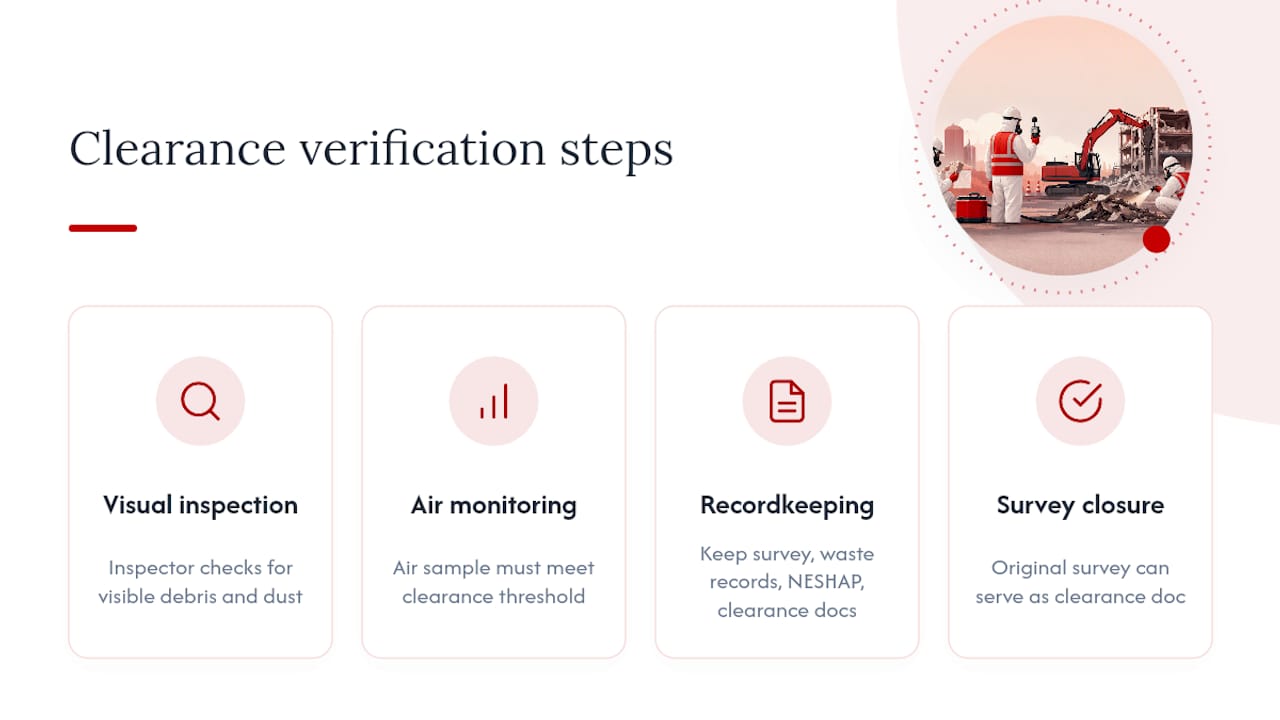
Demolition doesn’t close the file on asbestos compliance. If abatement happened before the wrecking crew moved in, most jurisdictions expect a clearance or final visual inspection confirming the abated area is free of visible debris and dust before demolition activity resumes on that footprint.
Clearance procedures generally include a visual inspection by a qualified inspector, checking for any remaining suspect material, dust accumulation, or debris that wasn’t properly contained. Some states also require air monitoring after abatement, comparing results against a clearance threshold before the area is released for demolition or reoccupation. That air sample needs to come back clean, or the area stays off limits.
Recordkeeping is the part owners underestimate. Waste shipment records for any ACM removed, the original survey report, the NESHAP notification, and clearance documentation should all be kept together and retained well past the demolition date. If a regulator or a future buyer of the site asks for proof the project was handled correctly, that file is the only thing that answers the question.
For projects where no abatement was necessary because the survey found no RACM, the original survey report itself typically serves as the clearance documentation. That’s one more reason a thorough, well-documented survey pays off long after the dust settles: it’s the record that closes out the project’s regulatory obligations, not just the one that opens them.
Staying Safe While the Survey and Demolition Happen
The survey phase carries its own exposure risk, particularly during destructive inspection, when an inspector is cutting into walls or pulling up flooring to reach hidden material. Inspectors performing that work should use proper respiratory protection rated for asbestos fibers and follow containment procedures that keep any disturbed material from spreading dust into occupied areas of the building.
Once demolition starts, the precautions shift but don’t disappear. If RACM was found and removed, the abatement crew handles that work under negative-pressure containment, separate from the general demolition crew, following a sequence where abatement is complete and cleared before heavy equipment moves in on that section of the structure.
For the demolition crew itself, training matters as much as equipment. Workers should understand which areas of the site carried asbestos findings, even after abatement, so nobody treats a cleared area carelessly or disturbs adjacent material that wasn’t part of the original scope. OSHA respiratory protection standards apply to any personnel who might encounter asbestos-containing dust, and a documented site safety plan should spell out exactly who’s authorized in which zones at which project phase.
Water suppression, proper waste bagging and labeling, and controlled demolition sequencing (working from areas confirmed clear toward any zones that required more scrutiny) round out the practical safety measures most experienced contractors build into the schedule automatically.
What Happens If You Skip the Survey or Ignore the Rules
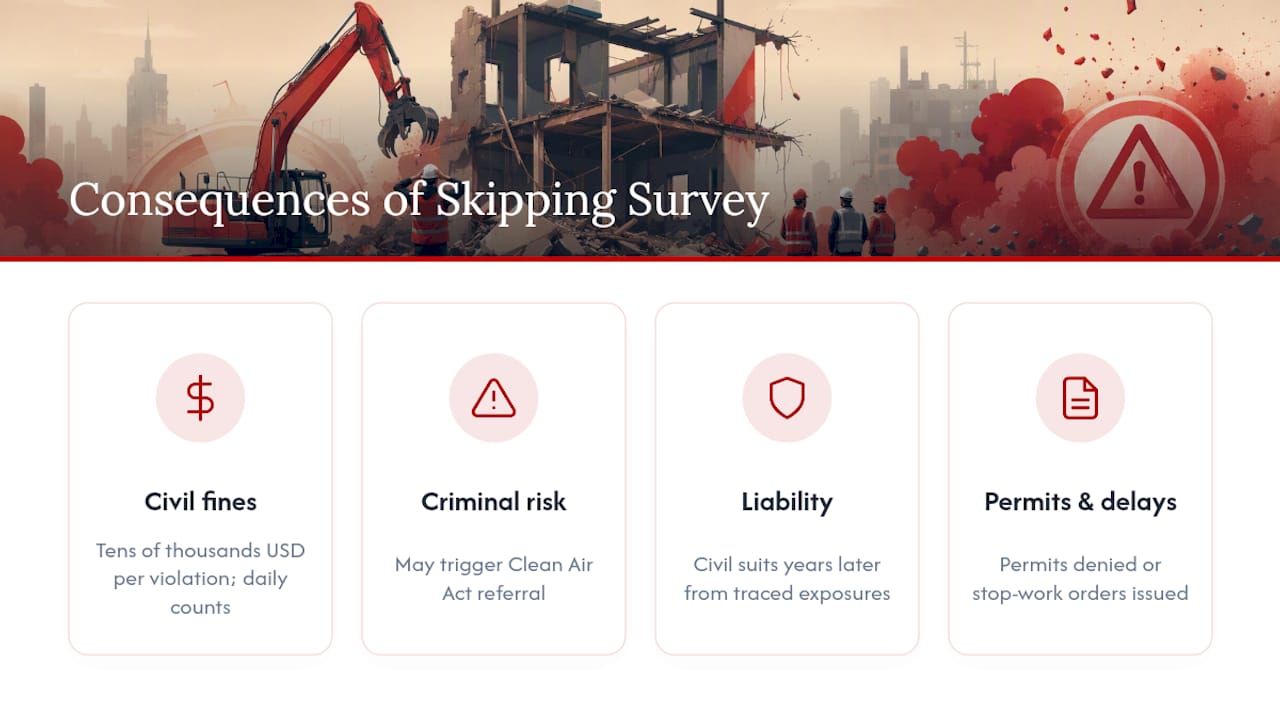
Non-compliance with NESHAP’s survey and notification requirements carries real financial and legal weight, not just a paperwork headache. The EPA and state environmental agencies enforce these rules with civil penalties that can run into tens of thousands of dollars per violation, and each day of continued non-compliance on an active site can count as a separate violation.
Beyond civil fines, owners and operators who knowingly demolish a structure without a required survey, or who proceed despite known asbestos findings, can face referral for criminal enforcement under the Clean Air Act in serious cases. That’s a materially different risk than a missed permit fee.
There’s also the exposure liability that outlives the project itself. Workers, neighbors, or future site occupants who can trace an asbestos exposure back to a demolition that skipped its survey obligations create a legal liability that can follow the property owner for years, independent of whatever the regulatory agency decides to do.
Permitting offices in many jurisdictions won’t issue a demolition permit at all without survey documentation on file, which means skipping the survey doesn’t just risk a fine. It can stop the project before it starts, or force a costly stop-work order mid-demolition once an inspector notices the paperwork gap.
Type 1, Type 2, and Type 3 Surveys: Which One Applies to Your Project
The survey type language comes from UK and international asbestos management frameworks, but the underlying concepts translate directly to how US demolition surveys scale with project scope.
A Type 1 survey (sometimes called a management or presence survey) is a non-intrusive visual check, appropriate for routine maintenance where nothing is being disturbed structurally. It’s not sufficient for demolition.
A Type 2 survey adds sampling of accessible materials without significant destructive work, useful for a renovation that will disturb finishes but not open up wall cavities or below-grade structures.
A Type 3 survey, often called a full access or pre-demolition survey, is what NESHAP actually requires for demolition work. It includes destructive inspection to reach concealed materials, comprehensive sampling across every material type present, and enough documentation to support a complete NESHAP notification. If your project is heading toward demolition rather than a light renovation, a Type 3 scope is the one your inspector should be quoting, not a lighter-touch survey that leaves gaps a wrecking crew will expose later.
Why Early Surveys Change the Whole Project, Not Just the Paperwork
Owners who treat the survey as a permitting formality miss the real value. A survey completed before bids go out gives every contractor the same scope information, and that consistency is what keeps bids comparable instead of wildly different guesses about unknown conditions.
Projects that skip this step almost always pay for it later, usually through change orders once a crew finds ACM the original scope never accounted for. A survey done early isn’t an extra cost. It’s the thing that keeps the actual cost from surprising anyone once demolition is underway.
— Zach
Working With Cornelius Wrecking on Your Next Demolition Project
Cornelius Wrecking gives owners something most demolition bids don’t: a single contractor who holds both OSHA safety training and asbestos abatement certification, so survey findings, abatement, and the actual wrecking work run through one coordinated team instead of three separate vendors trying to sync schedules.
That matters most on projects where the survey turns up RACM and the clock is already running on your NESHAP notification. Instead of chasing down a separate abatement contractor after the fact, a demolition contractor can plan the removal sequence alongside the demolition schedule from day one, which is where most projects lose time. Some demolition contractors have crews and equipment fleets to cover residential, commercial, and industrial demolition, including complex sites like power plants and marine vessels, across Missouri, Kansas, and nationwide large-scale projects.
If you have a demolition on the calendar and need a contractor who can handle site assessment through final teardown, request a project estimate from Cornelius Wrecking and get a realistic timeline before you commit to a demolition date.
Where to Verify the Rules Yourself
Don’t take any contractor’s word, including this one, as the final answer on what your specific project requires. Check the primary sources directly:
- 40 CFR § 61.145 for the federal notification and inspection text itself
- EPA guidance on asbestos-containing materials and demolition for material classification and applicability questions
- Your state environmental agency’s asbestos program, such as Michigan EGLE’s inspection guidance, for state-specific procedural requirements
This article is general information, not a substitute for advice from a qualified lawyer. Consult a qualified legal professional about your own circumstances before acting on anything here.
Sources
- 40 CFR § 61.145 - Standard for demolition and renovation. | LII / Cornell Law
- Asbestos-Containing Materials (ACM) and Demolition | US EPA
- Asbestos inspection guidance | Michigan EGLE
FAQ
Does Asbestos Need to Be Removed Before Demolition?
Regulated Asbestos-Containing Material generally must be removed before demolition, though non-friable material unlikely to become friable during the planned demolition method, and material properly encased in concrete, can sometimes remain with proper documentation.
What Is the 3-5-7 Rule for Asbestos Sampling?
There’s no standardized “3-5” rule recognized in federal NESHAP regulation or major state guidance; sampling quantities instead follow protocols tied to material type, homogeneous area size, and the analytical method used, so check your state’s specific sampling guidance rather than relying on that shorthand.
What Is an Asbestos Refurbishment and Demolition Survey?
It’s a full-access, intrusive survey conducted before demolition or major refurbishment work, similar to what’s called a Type 3 survey in the US context, designed to locate asbestos in every accessible and concealed area a project will disturb.
Who Pays for the Asbestos Survey Before Demolition?
The property owner or operator commissioning the demolition is responsible for arranging and paying for the survey under NESHAP, since the regulation places compliance obligations on that party directly.
How Long Does a Pre-Demolition Asbestos Survey Take?
The site inspection itself often takes a day or two depending on building size, while lab analysis of bulk samples typically adds another 3 to 5 business days before results are ready to support your NESHAP notification.
Planning a demolition or excavating project?
Get a fast, no-obligation quote from Cornelius Wrecking.
Request a Quote