Project Managers: Demolition Timeline — 4–8 Weeks to 6–18 Months
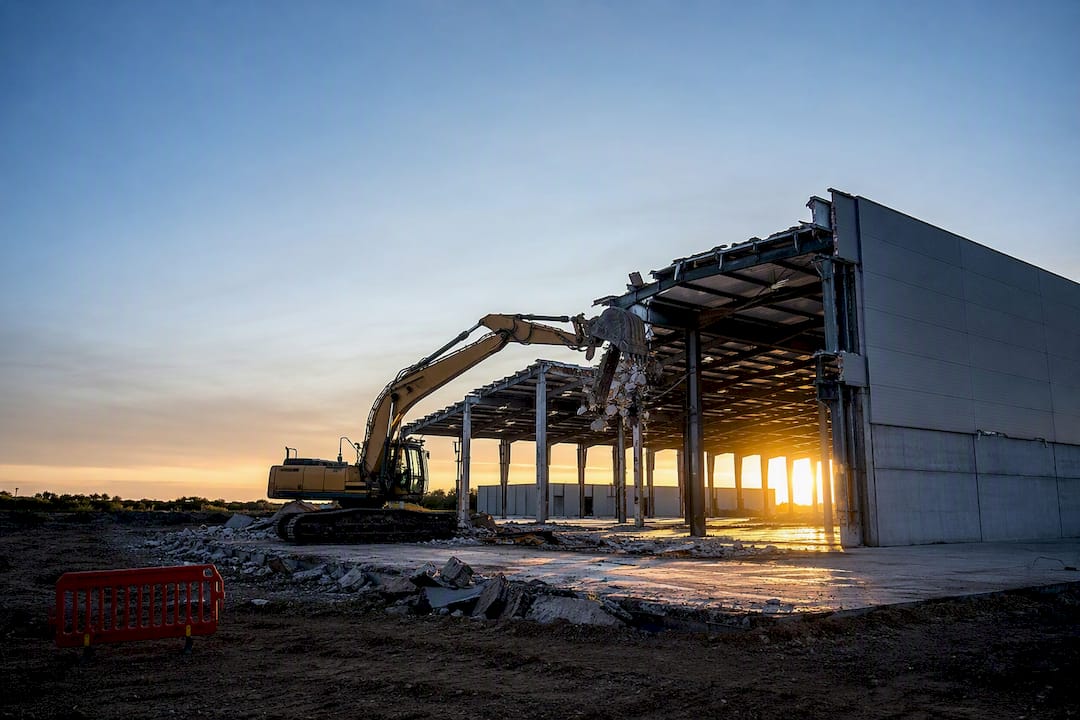
Small residential demolitions typically wrap up in 4 to 8 weeks, commercial buildings run 8 to 20 weeks, and industrial or contaminated sites can stretch 6 to 18 months or longer. The gap between those numbers almost never comes from the wrecking itself. Permitting, asbestos testing, and utility disconnects eat most of the calendar, governed by rules from OSHA and EPA NESHAP that no contractor, including Cornelius Wrecking, can shortcut.
TL;DR:
- The critical path in demolition schedules is almost always dominated by permitting and asbestos abatement, which can add several weeks beyond active demolition time.
- Small residential demolitions generally take 4 to 8 weeks, while mid-size commercial projects span 8 to 20 weeks, with delays often caused by regulatory approval timelines.
- Building an effective schedule requires using Gantt charts and critical path analysis, with at least one to two weeks of float around permitting and abatement to handle potential delays.
- Pre-project sampling, early permit submission, and overlapping tasks like abatement mobilization can save weeks in large industrial or complex commercial demolitions.
- Handling all phases through the same contractor or integrated planning tools minimizes delay risks, especially for projects with extensive regulatory or asbestos-related requirements.
Table of Contents
- What Are the Phases of a Demolition Project Timeline?
- How Long Does Demolition Take for Different Project Types?
- How Do You Build a Demolition Project Schedule?
- What Permits and Regulatory Steps Affect the Schedule?
- How Do You Protect the Schedule From Delays?
- What Contractors Learn From Sequencing Real Demolition Jobs
- Get a Timeline Review for Your Next Demolition Project
- Key Standards and Templates Worth Bookmarking
- Sources
- FAQ
What Are the Phases of a Demolition Project Timeline?
A demolition project timeline breaks into seven phases, and knowing which ones can overlap is what separates a realistic schedule from a wish list.
- Pre-demolition assessment and surveys: structural review, utility mapping, and the OSHA-required engineering survey under Subpart T, usually 3 to 10 days.
- Permitting and approvals: municipal review of your submitted schedule and safety plan, taking from a few days up to multiple weeks depending on jurisdiction.
- Hazardous-material testing and abatement: asbestos sampling, lab turnaround, and remediation work, often the longest non-active phase.
- Mobilization and protection: fencing, utility disconnects, dust and noise controls, typically taking a few days and often running in parallel with late permitting.
- Active demolition: the physical knock-down, which usually represents the shortest phase relative to the total timeline.
- Debris hauling and processing: trucking, on-site crushing, or recycling sorting, often running concurrently with the tail end of active demolition.
- Site stabilization, inspection, and closeout: grading, erosion control, and final municipal approvals.
Permitting and abatement almost always sit on the critical path. Mobilization tasks like fencing and signage rarely do. That distinction shapes every scheduling decision that follows, because time saved on parallel tasks does nothing for your finish date if the critical path is still running.
How Long Does Demolition Take for Different Project Types?
Project scale changes the math more than most planners expect. Here’s what realistic sequencing looks like across three common scenarios.
- Single-family residential: total elapsed time of 4 to 8 weeks. Pre-work (survey, permit, asbestos testing) usually takes 2 to 4 weeks, and active demolition takes just 1 to 3 days once crews mobilize. The critical path is almost entirely regulatory: permit issuance and the asbestos notification window, if the home has regulated materials, both have to clear before the excavator shows up.
- Mid-size commercial: total elapsed time of 8 to 20 weeks. Expect 4 to 8 weeks of pre-work covering surveys, permitting, and abatement, then 2 to 6 weeks of active demolition depending on square footage and structural type. In many jurisdictions, abatement must be fully closed out and documented before the demolition permit is even issued, which forces a hard sequence rather than a parallel run.
- Large industrial or decommissioning projects: total elapsed time of 6 to 18 months or more. Pre-work alone, covering environmental assessment, multi-phase abatement, and utility coordination with multiple agencies, can consume 3 to 6 months before any structural demolition begins. Active demolition and debris processing typically run for an extended period, often including on-site crushing or live-loading to comply with trucking constraints.
Contamination level is the real wild card. A commercial building with clean survey results can beat the low end of its range, while one flagged for asbestos-containing materials will sit closer to the high end no matter how efficient the demolition crew is.
How Do You Build a Demolition Project Schedule?
Build it on a Gantt-based critical path method with float baked in, not bolted on afterward. Gantt charts and CPM analysis are the standard tools for this because they visualize task dependencies and durations while making the critical path visible at a glance.
Here’s the sequence that produces a defensible schedule:
- Build a work breakdown structure (WBS) that separates every phase into discrete, estimable tasks.
- Assign durations using historical data or contractor input rather than optimistic guesses.
- Map dependencies so you can identify which tasks are truly sequential and which can run in parallel.
- Run the critical path method to find the longest dependent chain. That chain determines your finish date, full stop.
- Set milestones at permit issuance, abatement completion, start of active demolition, and final inspection.
- Baseline the schedule once it’s approved, so you have a fixed reference point to measure slippage against.
- Run rolling look-aheads, typically two to three weeks out, to keep crews focused on immediate tasks and catch cascading delays early, a habit Projectmanager points to as one of the most effective ways to avoid miscommunication on active sites.
Templates matter more than people think here. Gantt-based scheduling templates with built-in columns for approvals, dependencies, and inspection status cut down on manual tracking errors and speed up the initial build.
Pro Tip: Reserve at least one to two weeks of float specifically around permitting and abatement milestones. These are the two phases most likely to slip due to factors outside your crew’s control, and unprotected float there is the fastest way to blow a completion date.
What Permits and Regulatory Steps Affect the Schedule?
Two federal rules set hard minimums that no amount of scheduling skill can compress. The EPA NESHAP rule requires a 10-business-day notification period before demolition begins whenever regulated asbestos-containing materials are present. That clock starts only after sampling confirms what’s in the building, so lab turnaround time effectively extends it further. Separately, OSHA’s Subpart T standard requires an engineering survey of the structure before demolition work starts.
Municipal permit applications add their own layer. Most jurisdictions require your submitted demolition schedule to include a proposed start date, key milestones, daily work hours, and confirmation of safety measures like fencing and dust control. If the project slips past the original start date, many municipalities require a revised schedule filing, which can trigger a fresh review cycle.
Handle these in the first two weeks, before you even finalize a demolition contract:
- Send utility disconnect request letters to every affected provider.
- Order material sampling for lead, asbestos, and other regulated substances.
- Draft abatement scopes based on lab results.
- Confirm lab turnaround times up front. Rush results cost more but can save weeks.
How Do You Protect the Schedule From Delays?
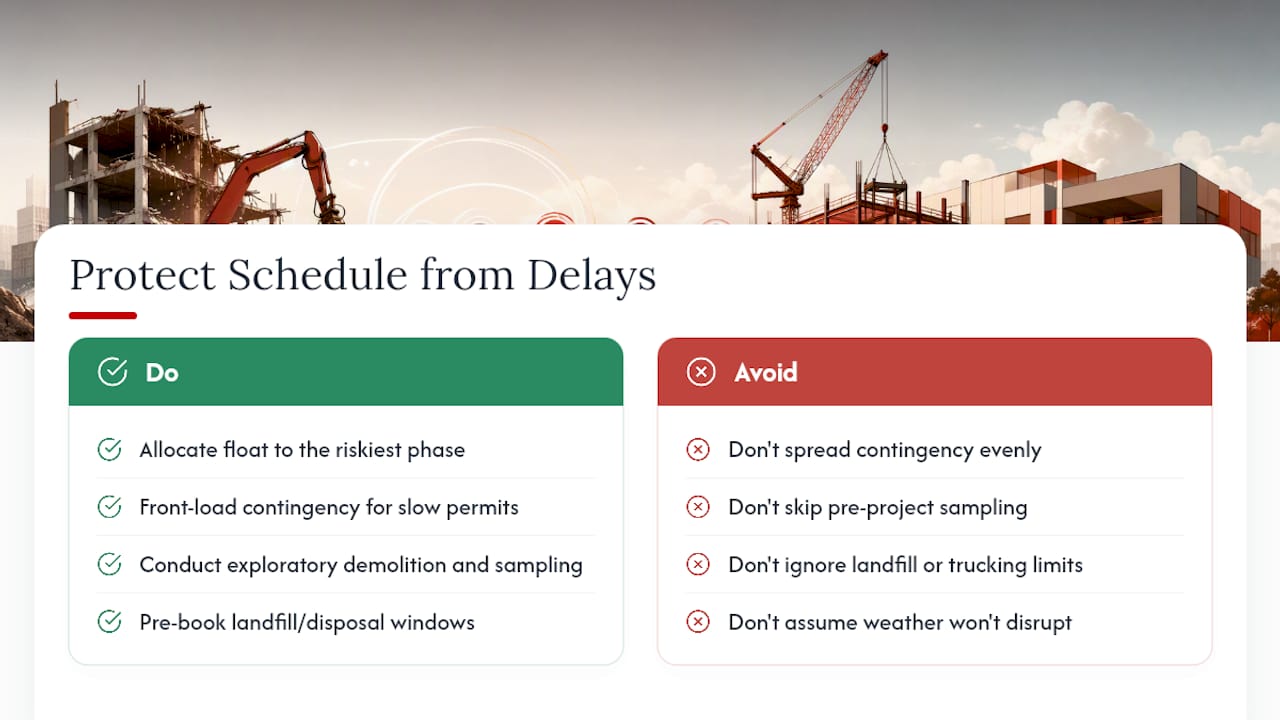
Four risks account for most demolition schedule slippage: permitting backlogs, hazardous material discoveries mid-project, weather, and landfill or trucking constraints that force live-loading in dense urban sites. Size your float against the riskiest phase, not the average one. If your project sits in a jurisdiction with slow permit turnaround, front-load contingency there rather than spreading it evenly.
Exploratory demolition and pre-project sampling reduce the odds of a mid-project hazardous material surprise, which is one of the most schedule-damaging events on any job. Pre-booking disposal windows and staging mobilization in phases also protects daily production when landfill intake hours or trucking restrictions limit how much debris you can move per day.
What Contractors Learn From Sequencing Real Demolition Jobs
A demolition company operates out of St. Joseph, Missouri, with nationwide reach on power plant decommissioning, marine vessel dismantling, and refinery and chemical plant demolition, backed by OSHA and asbestos abatement certifications. On multi-phase jobs, the biggest schedule protection comes from starting permit coordination and abatement contractor scoping the same week, not sequentially. Overlapping the abatement contractor’s mobilization with the tail end of permitting, and staging heavy equipment to arrive right as abatement clears, shaves real weeks off projects that would otherwise wait on each step individually.
— Zach
Get a Timeline Review for Your Next Demolition Project
Some demolition contractors cut the guesswork out of demolition scheduling by managing the engineering survey, abatement, heavy equipment, and hauling with the same crew, minimizing handoff delays between contractors.

That matters most on projects where permitting and asbestos abatement threaten to blow past your target completion date. With OSHA and asbestos abatement certifications, nationwide equipment fleets, and experience across residential, commercial, and heavy industrial sites, some demolition contractors can build schedules around actual regulatory exposure rather than generic templates. If your site prep involves complex approvals, a resource like automated site planning workflows can help you model approval timelines before ground even breaks. Request a project timeline review to get a realistic schedule built around your site’s actual conditions, not industry averages.
Key Standards and Templates Worth Bookmarking
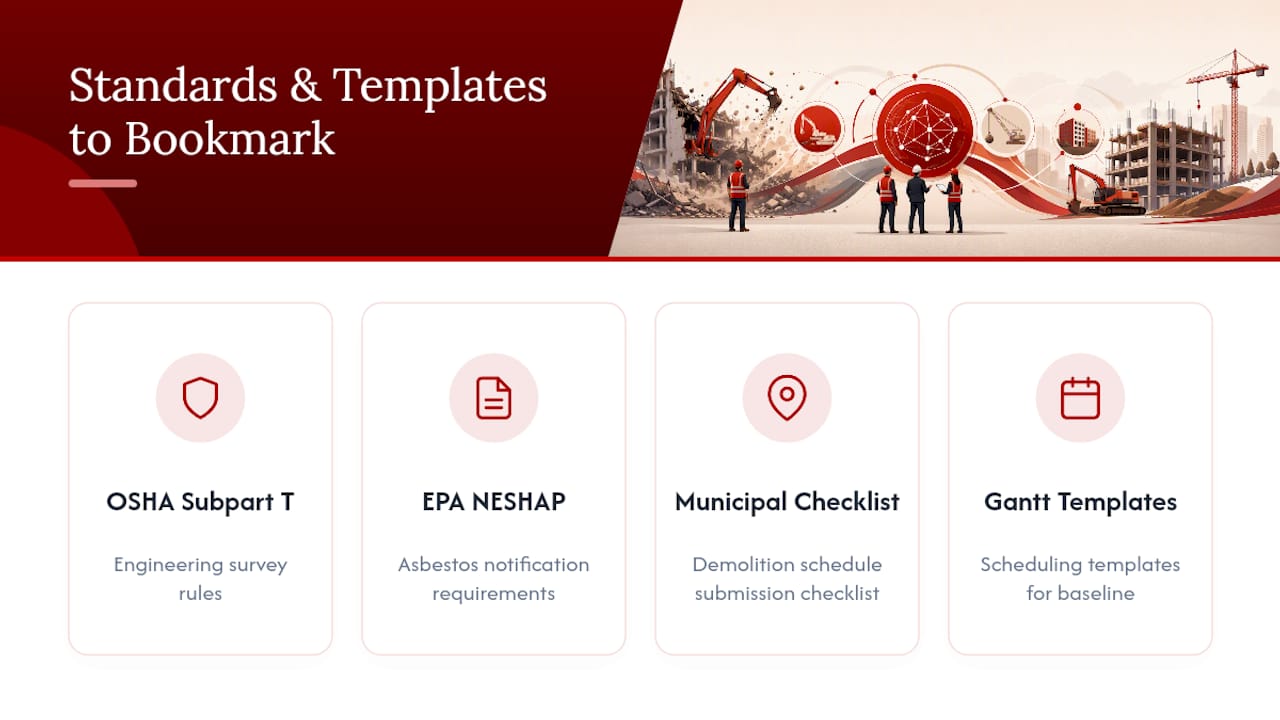
Check OSHA Subpart T for engineering survey rules, EPA NESHAP for asbestos notification requirements, your municipal demolition schedule submission checklist, and Gantt-based scheduling templates for building your baseline.
Sources
- Construction Scheduling | Oracle Construction and Engineering
- Demolition schedule | UpCodes
- Washington Adventist Hospital demolition update (June 2026)
- Demolition Timeline: How Long Does a Demolition Project Take | Demolition Authority
- Construction schedule templates | Smartsheet
FAQ
How Long Does a Typical Demolition Project Take?
Small residential jobs usually take 4 to 8 weeks total, commercial projects run 8 to 20 weeks, and large industrial demolitions can take 6 to 18 months or longer depending on contamination and regulatory complexity.
How Much Does Asbestos Add to a Demolition Schedule?
Asbestos-containing materials trigger a mandatory 10-business-day EPA notification period before demolition can begin, plus lab sampling turnaround and abatement work time that often adds several weeks total.
What Should a Demolition Permit Application Include?
Most municipalities require a proposed schedule with a start date, key milestones, daily work hours, and confirmation of site safety measures like fencing and dust control.
How Much Float Should I Build Into a Demolition Schedule?
Reserve one to two weeks of float around permitting and abatement milestones specifically, since those two phases carry the highest risk of delay from factors outside the crew’s control.
Can Active Demolition and Debris Hauling Happen at the Same Time?
Yes. Many large projects run debris hauling and on-site crushing concurrently with the tail end of active demolition, though landfill intake hours and local trucking restrictions can force live-loading and limit daily production.
Planning a demolition or excavating project?
Get a fast, no-obligation quote from Cornelius Wrecking.
Request a Quote