Do You Need a High Reach Demolition Excavator?
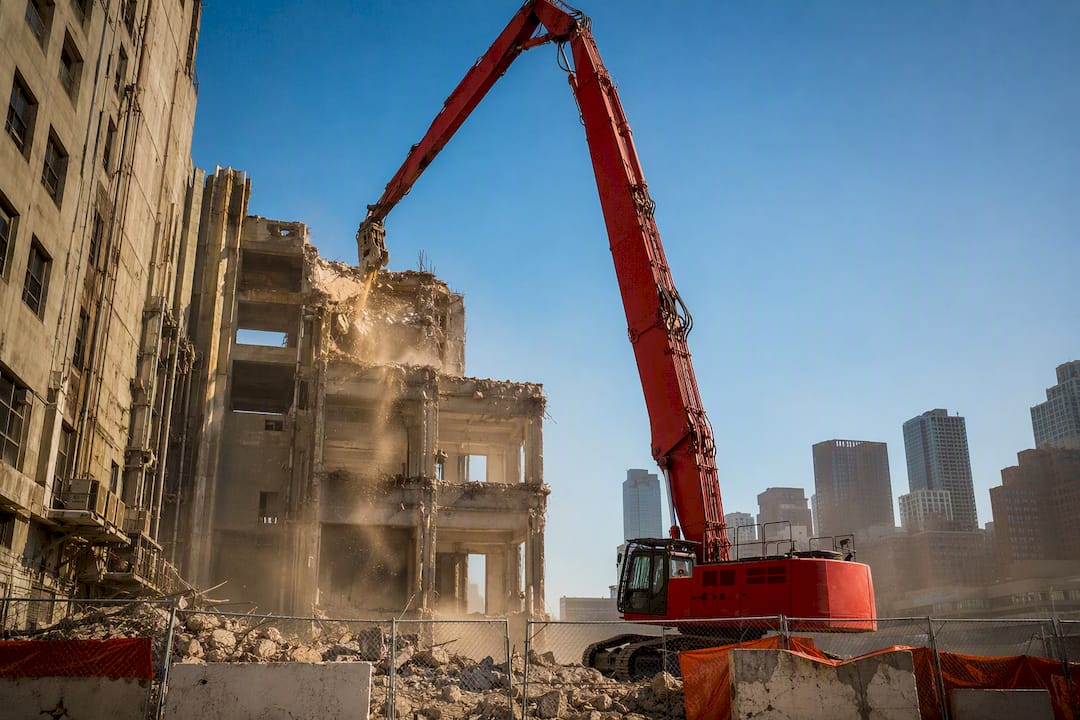
If your structure requires selective top-down removal above roughly six stories (around 65 feet), or the site is too tight for implosion and grade-level equipment can’t reach the upper floors, you need a certified high reach demolition excavator contractor. Height and site constraints are the deciding factors, not preference.
Before anything else moves, one action comes first: commission a licensed pre-demolition engineering survey and confirm the contractor’s OSHA and asbestos abatement credentials in writing.
The quick test for whether high-reach is the right method:
- The structure is roughly six stories or taller, with upper floors unreachable by standard excavators.
- Adjacent buildings, utilities, or property lines rule out implosion or crane-assisted demolition.
- The project calls for selective, floor-by-floor removal rather than a single controlled collapse.
Cornelius Wrecking holds OSHA and asbestos abatement certifications and handles high-reach and large-scale demolition work nationwide, making it one available option worth evaluating against these criteria.
Key Takeaways
High reach demolition succeeds when a licensed engineering survey, complete hazardous-materials abatement, and a documented site safety plan are all in place before mechanical work begins.
| Point | Details |
|---|---|
| Check height and site fit | High-reach makes sense above roughly six stories or when implosion and grade-level methods aren’t viable. |
| Engineering survey comes first | A licensed structural engineer must sign a method statement before permits or mobilization proceed. |
| Abatement precedes structure work | Asbestos, lead, and PCB removal under EPA NESHAP must finish before demolition starts. |
| Reach doesn’t equal tool capacity | Safe attachment ratings drop at full boom extension, so verify ratings at your building’s working height. |
| Vet documents, not promises | Demand signed surveys, abatement reports, permits, and insurance certificates from Cornelius Wrecking or any contractor before signing a contract. |
Table of Contents
- When Is High Reach Demolition the Right Method?
- What Planning and Permits Does High Reach Demolition Require?
- What Happens on the Job Site During High Reach Demolition?
- How Do You Vet and Choose a High Reach Demolition Contractor?
- Request a High Reach Demolition Survey and Proposal
- Sources
When Is High Reach Demolition the Right Method?
Height is the first trigger. Once a structure climbs past roughly 65 feet, or about six stories, standard excavators and wrecking balls physically can’t reach the upper floors with enough control to bring material down safely. A high-reach demolition excavator with an extended, multi-section boom solves that reach problem, and it does it through a top-down, sequential process rather than a single collapse event.
Site footprint is the second trigger, often more decisive than height alone. A downtown tower surrounded by occupied buildings, active streets, and buried utilities can’t be imploded or knocked down with a wrecking ball, no matter how short it is. High-reach demolition shrinks the exclusion zone and keeps debris fall contained to a controlled radius.
Material matters too. Reinforced concrete, steel framing, and glass curtain-wall façades each demand different attachments and different sequencing. A building with a steel frame under a glass skin needs a different approach than a poured-concrete structure with masonry infill, and a competent contractor should be able to explain that difference before they ever put a machine on site.
The trade-off is real, though. High-reach work costs more to mobilize, needs specialized attachments, and moves slower than grade-level demolition because it’s inherently more careful. For short buildings on open lots, where implosion or standard mechanical demolition can do the job faster and cheaper, high-reach is overkill.
Advantages worth weighing:
- Controlled, floor-by-floor removal reduces the risk of progressive collapse.
- Smaller exclusion zones mean less disruption to neighboring properties and traffic.
- Selective demolition allows salvage or recycling sorting as work progresses.
- Higher mobilization and equipment costs compared to grade-level methods.
What Planning and Permits Does High Reach Demolition Require?
Nothing mechanical should start until four things are documented, signed, and filed. Skipping any one of them is how projects end up with stop-work orders or, worse, collapses that hurt people.
-
Pre-demolition engineering survey. A licensed structural engineer needs to map load paths, identify potential collapse vectors floor by floor, and sign off on the demolition methodology. This survey is what permitting authorities typically require before they’ll issue a demolition permit, and it’s the single document that separates a planned demolition from a guess.
-
Hazardous-materials survey and abatement. Asbestos, lead paint, and PCB-containing materials have to be identified and removed before structural work touches the building. In the U.S., this sequencing is governed by EPA NESHAP under 40 CFR Part 61, Subpart M, and abatement has to be complete, not partially started, before demolition begins.
-
Permits and regulatory triggers. Municipal demolition permit packages generally require the engineering survey, an abatement clearance report, and a site safety plan. On the federal side, OSHA’s Subpart T (29 CFR 1926) governs demolition operations directly, and larger or more complex sites often draw additional agency review.
-
Written site safety plan. This covers exclusion and drop zones, a dedicated banksman with a communication protocol, dust suppression measures, daily inspection of the machine and platform, and documented operator qualifications specific to high-reach equipment.
Pro Tip: Ask for the engineering survey and method statement before you sign anything. If a contractor can’t produce a signed, dated survey specific to your structure, they’re planning to figure it out once the machine arrives, and that’s the wrong time to find out your building has a hidden structural surprise.
What Happens on the Job Site During High Reach Demolition?
Mobilization eats more time than most owners expect. Getting a high-reach machine to site involves transport permits, sometimes highway escorts, ground-bearing analysis to confirm the surface can support the machine’s weight, and ramping or platform setup before the boom even extends. None of that is optional, and skipping the ground-bearing check is how machines tip.
One trade-off catches almost every first-time buyer off guard: maximum reach does not mean maximum lifting or crushing capacity. As the boom extends to its full working height, leverage and boom geometry cut the safe tool rating well below what the same excavator can handle in normal-mode operation closer to the ground. A competent contractor documents the safe tool rating at the specific working radius your building requires, not just the machine’s spec sheet number.
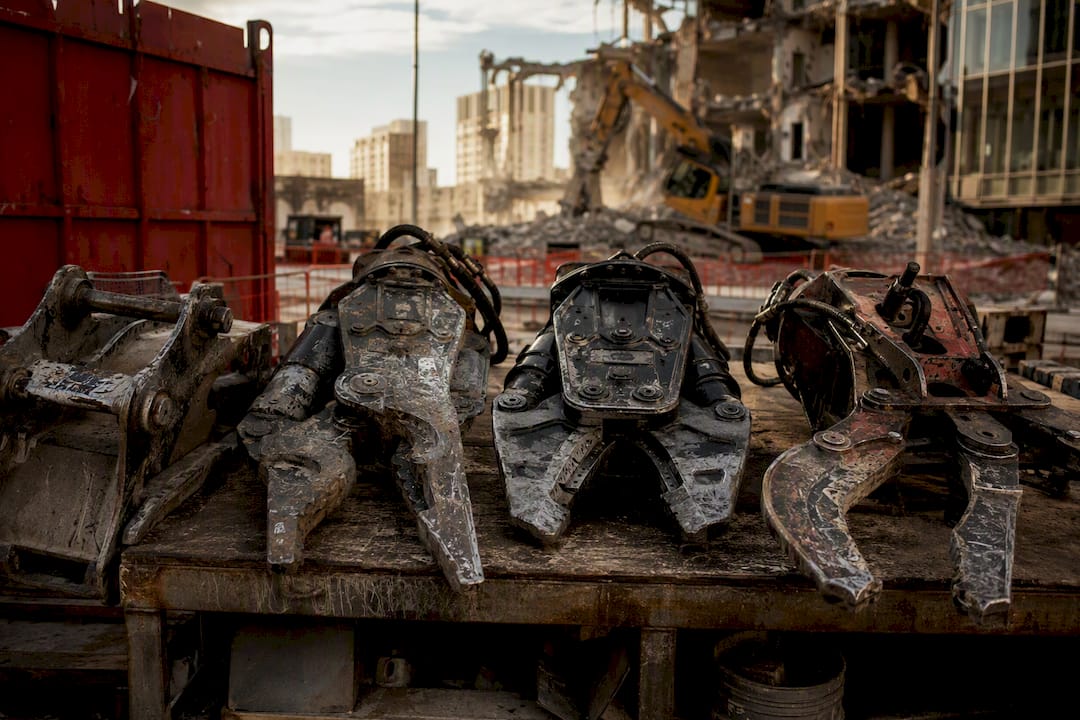
Attachments get swapped floor by floor depending on the material in front of the boom:
- Processors and pulverizers break down concrete and masonry into manageable pieces.
- Shears cut through steel framing and rebar cleanly.
- Grapples handle debris sorting and loading once material hits the ground.
Debris handling shapes both timeline and cost. On-site crushing and separation let contractors recycle a large share of demolished material rather than hauling it to landfill, and projects that manage this well have reported very high recycling rates. That figure depends heavily on material type and site logistics, but it’s a real cost offset worth asking your contractor about.
The biggest cost drivers, in order: abatement scope, mobilization and demobilization logistics, permit lead time, and crew hours on site. Build in contingency for hidden hazards. Old buildings routinely surprise abatement crews once walls come down.
How Do You Vet and Choose a High Reach Demolition Contractor?
Start with documents, not conversation. A contractor who can talk confidently about high-reach work but can’t hand you paperwork isn’t ready for your project.
-
Demand the signed engineering survey and method statement specific to your building, along with the abatement report, municipal permits, and current certificates of insurance.
-
Verify certifications and track record. Look for documented OSHA training, asbestos abatement certification, and logged operator hours on high-reach equipment specifically, not just excavator experience generally. Ask for references from comparable projects, whether that’s a power plant decommissioning or a tall commercial teardown.
-
Pin down contract must-haves before signing: scope broken out by phase, mobilization and demobilization costs stated separately, which attachments are included versus billed extra, schedule milestones, the change-order process, and a clause covering what happens if unknown hazards turn up mid-project.
Red flags worth walking away from: a contractor who can’t name their asbestos abatement certification, one who quotes a single lump sum with no phase breakdown, or one who dismisses the engineering survey as “not really necessary for a building this size.” On the site walk, ask directly how they plan to handle the exclusion zone, who serves as banksman, and where they’ll stage the maintenance area for swapping attachments. A contractor with real experience answers those questions without hesitation.
Pro Tip: Cornelius Wrecking recommends every buyer ask one blunt question during the proposal stage: “What’s your tool rating at our specific working height, not your machine’s spec-sheet maximum?” The answer tells you immediately whether you’re talking to someone who’s actually planned a job like yours.
How Cornelius Wrecking Approaches High Reach Projects
Cornelius Wrecking has handled complex, large-scale demolition and abatement work including power plant decommissioning, marine vessel dismantling, and industrial site teardowns nationwide. . Our approach follows a fixed sequence: engineer the survey, complete abatement, mobilize equipment, execute phased high-reach dismantling floor by floor, then process debris on site.
— Zach
Request a High Reach Demolition Survey and Proposal
Cornelius Wrecking gives project owners something most demolition bids skip: a documented engineering survey and written method statement before any machine moves, so you know exactly what you’re paying for and why.
If you’re evaluating bids for a tall or structurally complex teardown, request an on-site engineering survey and a written proposal that includes a method statement, the full abatement scope, proof of insurance, a phase-by-phase schedule, and mobilization logistics. Skip any proposal missing those five items. Contact Cornelius Wrecking to schedule a site visit and get a scoped proposal for your project.
Sources
- What information is needed to plan a high reach demolition operation? - EDA
- High-Reach Demolition: Tall Building Teardown Techniques | Demolition Authority
Recommended
Planning a demolition or excavating project?
Get a fast, no-obligation quote from Cornelius Wrecking.
Request a Quote