Lead Paint Abatement: 4 Contractor Must Haves for Property Owners
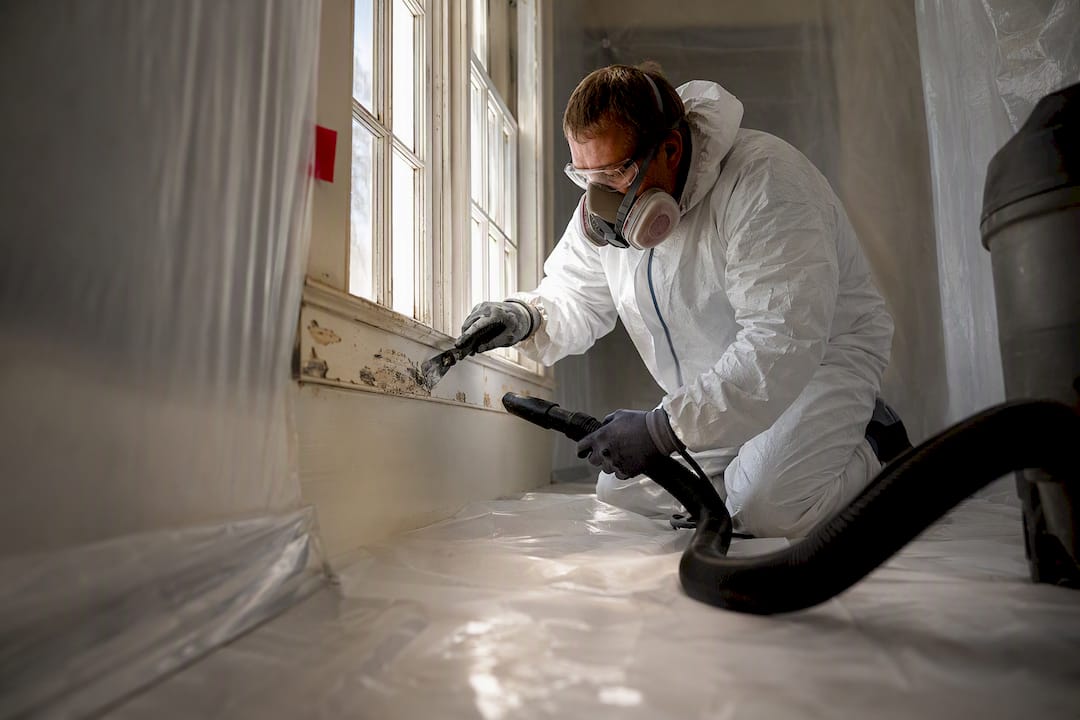
Lead paint abatement permanently eliminates lead-based paint hazards through certified removal, enclosure, encapsulation, or replacement work. It’s required when an inspection confirms a hazard or when a housing authority orders it, and it follows stricter rules than routine renovation. If you suspect a pre-1978 home has deteriorating paint, the next move is simple: schedule a certified inspection or risk assessment before anyone touches a wall, window, or door.
TL;DR:
- Lead abatement permanently controls lead hazards and requires certified firms and strict procedures, especially when an inspection confirms deterioration.
- Risk assessments evaluate actual hazards from dust and soil, guiding targeted, cost-effective abatement strategies rather than relying solely on surface testing.
- Enclosure and replacement are generally preferred over paint removal, which is invasive and generates significant dust, and remediation methods depend on the component and property use.
- Certification verification, containment quality, and proper documentation are critical to ensure a safe, compliant abatement process and avoid future lead risks.
- DIY removal almost always backfires, as improper practices spread lead dust; professional crews follow a strict sequence of assessment, containment, removal, cleanup, and testing.
Table of Contents
- What Lead Paint Abatement Actually Means
- How Do Inspections and Risk Assessments Differ?
- Comparing the Main Lead Abatement Methods
- How to Choose a Certified Abatement Contractor
- What Drives Lead Abatement Costs and Timelines
- Clearance Testing and Recordkeeping After Abatement
- Why DIY Lead Paint Removal Almost Always Backfires
- How Professional Crews Sequence and Document Abatement
- A Note on Doing This Right
- Get a Certified Abatement Assessment From Cornelius Wrecking
- Where to Verify These Rules Directly
- Sources
What Lead Paint Abatement Actually Means
Federal regulators define abatement as any activity designed to permanently control lead-based paint hazards, not just patch over them. That’s the core distinction from ordinary repair work: EPA guidance on abatement treats it as a long-term fix, one intended to hold up for roughly two decades, not a few paint seasons.
Renovation, Repair, and Painting (RRP) work is different. RRP applies to paid contractors disturbing painted surfaces in pre-1978 housing during routine remodeling, and it requires certified lead-safe work practices but doesn’t have to permanently resolve the hazard. Abatement is the stronger, more regulated response.
- Abatement: permanent hazard elimination, certified firm required, often triggered by inspection findings or a compliance order.
- RRP: lead-safe practices during general remodeling, no permanence requirement.
- Interim controls: temporary measures (paint stabilization, dust control) used only while permanent abatement is planned or scheduled, never as a substitute for it.
How Do Inspections and Risk Assessments Differ?
A paint inspection tells you where lead paint exists in a structure. A risk assessment goes further, measuring actual hazards from deteriorated paint, settled dust, and contaminated soil around the foundation. Homeowners often assume these are interchangeable. They’re not, and mixing them up leads to either unnecessary abatement or missed hazards.
- Paint inspection identifies lead-containing surfaces using XRF testing or lab samples, room by room.
- Risk assessment evaluates whether those surfaces, plus dust and soil, currently pose exposure risk to occupants, especially children.
- Independent evaluation matters because a contractor bidding on the removal job has an incentive to find more work, not less. HUD guidance recommends an independent assessment before committing to a scope, which helps avoid overpaying for invasive work when a simpler fix would do.
- The findings become your scope. A risk assessor’s report should specify which components need attention and which method fits each one, turning a vague worry into a defined project.
Comparing the Main Lead Abatement Methods
Not every hazard needs the same fix. HUD’s abatement guidelines outline four primary approaches, and choosing the right one depends on the component, its condition, and how the property gets used.
- Component replacement: swapping out the contaminated window, door, or trim piece entirely. It’s the most permanent option and often pairs naturally with a broader rehab or remodel.
- Enclosure: covering the hazard with a rigid barrier, like new drywall over a contaminated wall. Less invasive than removal, but it has a design life and needs periodic inspection to confirm the barrier hasn’t been breached.
- Encapsulation: applying a specialized coating that seals lead paint in place. Cheaper upfront, but maintenance schedules matter since a cracked encapsulant can expose dust again.
- Paint removal: stripping the paint on-site or sending components off-site for stripping. HUD’s own guidelines call this the most invasive method and recommend it only when replacement or enclosure won’t work.
- Soil abatement: removing contaminated soil or covering it with a barrier and clean fill. Planting grass over contaminated soil is not abatement. It’s an interim measure at best, since roots and erosion can bring lead back to the surface.
Historic properties add another wrinkle. Preservation review boards often push back on wholesale component replacement for original windows or trim, which tilts the decision toward enclosure or off-site stripping to preserve the material while still controlling the hazard.
Pro Tip: If a contractor proposes paint removal as the first option without discussing enclosure or replacement, ask why. HUD’s own guidance treats removal as a last resort because of how much lead dust it generates, and a shop that skips straight there may be optimizing for their bid, not your safety.
How to Choose a Certified Abatement Contractor
Certification isn’t optional. Both the firm and every worker on-site must hold current EPA, HUD, or state-level abatement certification, and asking to see those credentials before signing anything is a reasonable, expected request.
- Verify firm and individual worker certification numbers directly with your state program or the EPA database.
- Confirm the contractor has filed required pre-job notifications and pulled applicable permits; ask for a written notification schedule.
- Require documented containment plans, HEPA-filtered equipment, and proper worker PPE, along with written assurance that prohibited practices like open-flame burning or uncontrolled power sanding won’t be used.
- Get clearance testing, waste disposal procedures, insurance coverage, and payment milestones spelled out in the contract itself, not promised verbally.
Containment quality often separates a clean job from a contaminated one. The same principles that govern dust containment in hazardous remediation work apply directly here: poor barriers let contaminated dust migrate into living spaces regardless of how thorough the removal itself was.
What Drives Lead Abatement Costs and Timelines
Bids for what looks like the same job can vary widely, and the reasons usually trace back to a handful of factors.
- Scope size: the number of windows, doors, and painted surfaces involved drives labor hours more than square footage alone.
- Containment difficulty: occupied buildings, tight stairwells, or multi-unit properties raise setup costs.
- Disposal fees: lead waste requires special handling and licensed disposal, which adds cost that varies by region and volume.
- Relocation needs: some projects require temporary occupant relocation during active work, which affects both budget and schedule.
Timelines generally move through assessment, containment setup, the actual abatement work, cleanup, and clearance testing, with the setup and cleanup phases often taking as long as the removal itself. Federally assisted housing may also have HUD-driven triggers that determine when abatement becomes mandatory rather than optional, so property managers receiving federal funds should check those requirements early.
Clearance Testing and Recordkeeping After Abatement
Passing clearance testing is what actually closes out the job, not the contractor packing up their equipment.
- Dust wipe sampling gets collected from floors, windowsills, and window troughs, then analyzed at an NLLAP-recognized laboratory.
- Action levels, the current regulatory threshold for dust-lead hazards, have been updated in recent years and differ from older “clearance level” terminology still floating around older guidance documents, so confirm which standard your assessor is using.
- Keep records including the risk assessment report, contractor certifications, notification filings, and clearance test results indefinitely. These documents matter at resale, refinancing, and if a future tenant ever raises a health concern.
- Schedule periodic checks on enclosures and encapsulated surfaces, since a compromised barrier years later can reintroduce the exact hazard the abatement was meant to eliminate.
Why DIY Lead Paint Removal Almost Always Backfires
Scraping, dry sanding, or heat-gunning old paint yourself feels like a reasonable weekend project. It’s usually the fastest way to spread lead dust through a home’s HVAC system and soft furnishings, and EPA’s compliance guidance specifically flags open-flame burning and uncontrolled power sanding as prohibited practices for good reason.
- Safe interim steps include wet cleaning, HEPA vacuuming, and restricting access to deteriorated areas until certified pros arrive.
- Owners can legally do very limited maintenance themselves, but paid work disturbing lead paint in pre-1978 housing triggers RRP rules, and any permanent hazard fix triggers abatement rules requiring certified professionals.
How Professional Crews Sequence and Document Abatement
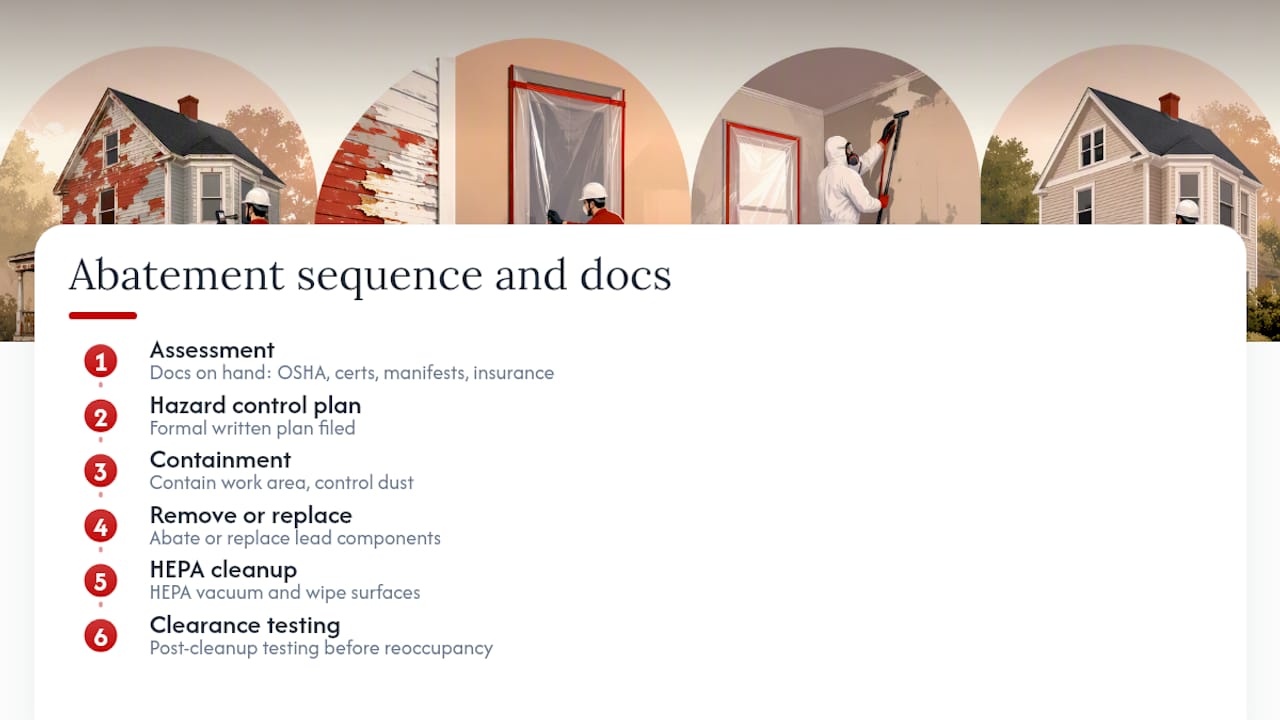
A qualified crew moves through assessment, a written hazard control plan, containment, removal or replacement, HEPA cleanup, and clearance testing, in that order. Documentation matters just as much as the work: OSHA training records, abatement certifications, disposal manifests, and insurance proof should all be available before the first wall comes down. Combined demolition and abatement capability matters most on larger or structurally complex projects, where separating those trades adds coordination risk.
A Note on Doing This Right
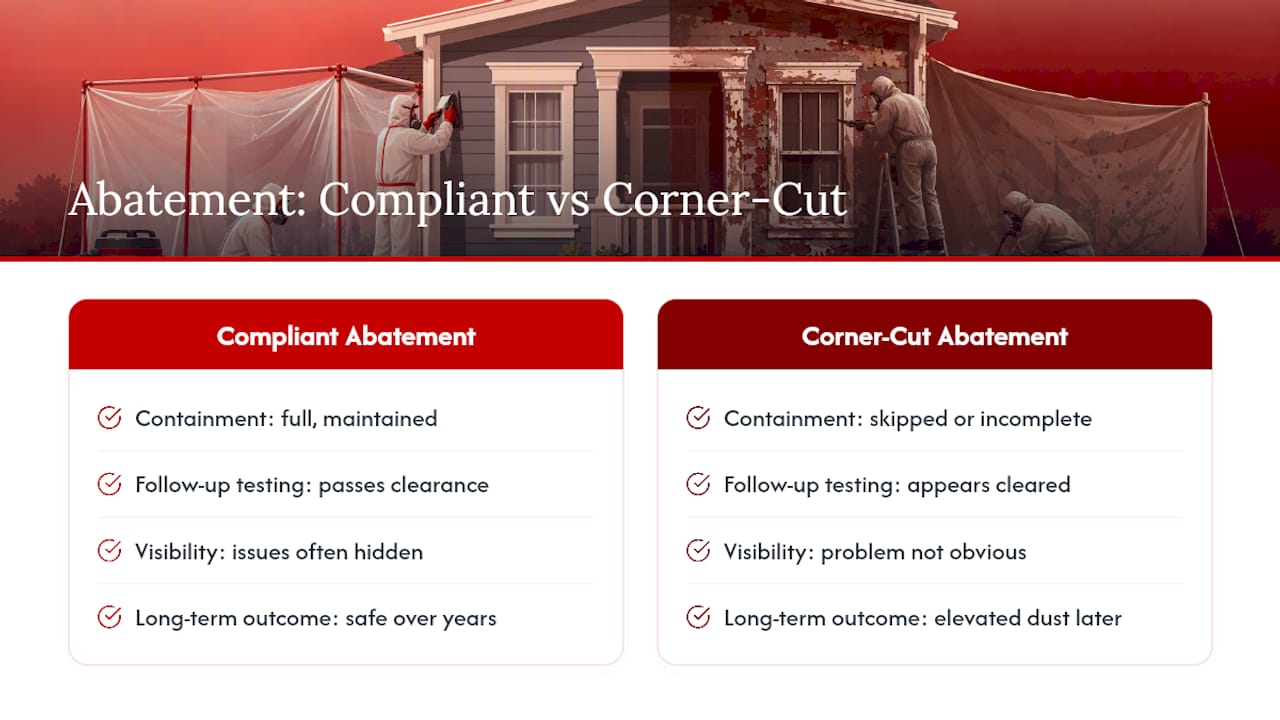
Lead hazards don’t announce themselves, and that’s what makes this work worth taking seriously rather than treating as another line item on a renovation punch list. The gap between a compliant abatement job and a corner-cut one usually isn’t visible until years later, when a “cleared” property still shows elevated dust-lead levels because someone skipped proper containment.
,
— Zach
Get a Certified Abatement Assessment From Cornelius Wrecking
Corneliuswrecking pairs OSHA and asbestos abatement certifications with nationwide demolition experience, which matters most on the jobs where lead hazards, structural removal, and disposal logistics all collide at once. Rather than juggling separate contractors for demolition and hazard abatement, you get one crew that documents both under a single scope, cutting the coordination gaps where mistakes tend to happen.

When you request an estimate, ask specifically for certification numbers, a clearance testing plan, a written waste disposal procedure, and proof of insurance. Those four items separate a serious bid from a cheap one. If you’re managing a property with confirmed or suspected lead hazards, especially one involving demolition, decommissioning, or large-scale structural work, request an on-site assessment from Cornelius Wrecking and get a scope built around what your building actually needs.
Where to Verify These Rules Directly
Consult EPA’s abatement program, HUD Chapter 12, and 40 CFR part 745 for the primary regulatory text.
This article is general information, not a substitute for advice from a qualified doctor. Consult a qualified healthcare professional about your own circumstances before acting on anything here.
Sources
Planning a demolition or excavating project?
Get a fast, no-obligation quote from Cornelius Wrecking.
Request a Quote