Site Managers: 7 Checks to Make OSHA 10/30 Contract Enforceable
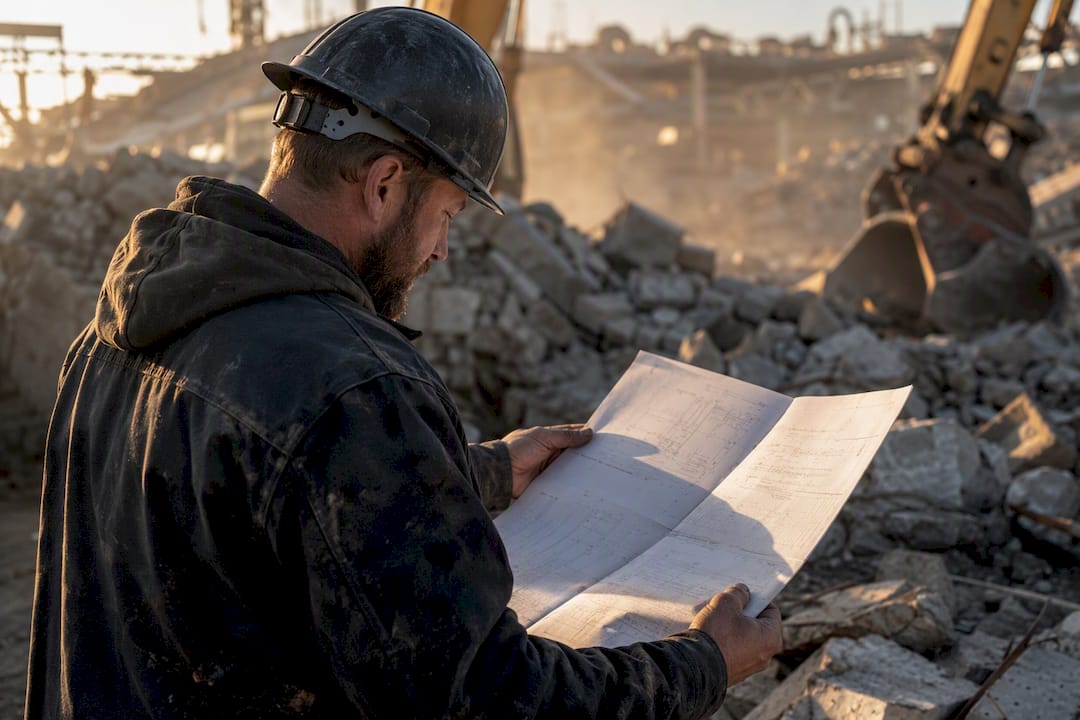
Require OSHA 10 for every general laborer on a demolition or excavation crew, and require OSHA 30 for every foreman, supervisor, and safety lead. Neither card makes that person a “competent person” under 29 CFR 1926, so procurement still needs a written engineering survey and documented competent-person evidence before mobilization. Ask for wallet cards or completion certificates, the engineering survey, and a signed competent-person attestation before crews touch the site.
TL;DR:
- OSHA 10 cards only confirm hazard awareness training, while OSHA 30 indicates supervisory experience, but neither certifies a competent person under OSHA rules.
- Demolition projects require a written engineering survey by a qualified competent person before work begins, which no outreach training can replace.
- Contract requirements should include current OSHA 30 for supervisors, documented hazard analyses, and a clear definition of the competent person’s authority and role.
- Federal OSHA does not mandate OSHA 10 or 30 training for private construction, but local laws or contract clauses often do, especially in certain jurisdictions.
- Pre-mobilization checks must include certification validity, a signed engineering survey, hazard assessment records, and confirmation of asbestos or HAZWOPER certifications where applicable.
Table of Contents
- OSHA 10 vs OSHA 30: What Each Credential Actually Signals
- What Federal Rules Actually Require Beyond a Card
- What to Verify Before Crews Mobilize
- Contract Language and Recordkeeping That Actually Hold Up
- How Cornelius Wrecking Handles This on Every Job
- Sources
OSHA 10 vs OSHA 30: What Each Credential Actually Signals
The two cards answer different questions for a buyer. OSHA 10 tells you a worker has sat through baseline hazard awareness training. OSHA 30 tells you someone has been through the longer, supervisor-focused version of the same curriculum, with more time spent on hazard recognition, fall protection, and job planning.
The OSHA Outreach Training Program issues both as course-completion credentials rather than licenses. OSHA 10 runs as an entry-level awareness course. OSHA 30 is built for people who will be making decisions on-site, not just following them. That distinction shows up constantly in how general contractors write their bid specs: OSHA 10 gets listed as a minimum for site access, while OSHA 30 gets named specifically for the person running the crew.
Here’s what each card proves, and what it doesn’t:
- OSHA 10 proves a worker has covered general hazard recognition topics relevant to construction. It does not qualify anyone to supervise, sign off on hazard assessments, or make structural judgment calls.
- OSHA 30 proves broader exposure to hazard management and leadership-level training content. It does not, by itself, satisfy the “competent person” designation required under demolition-specific OSHA rules.
- Neither card certifies task-specific skills like rigging, confined space entry, or asbestos handling. Those need separate, dedicated training.
Fall-related incidents remain a driving reason contracts push supervisory training so hard. Falls account for roughly 37% of private construction deaths, which is exactly the kind of exposure OSHA 30’s expanded curriculum is designed to address. On a demolition site, where structural instability adds another layer of risk on top of standard fall hazards, that supervisory depth matters more than a paper qualification. Owners who list OSHA 30 as a bid requirement for supervisors aren’t being bureaucratic. They’re pricing in the fact that a wrecked building doesn’t behave like a standing one.
What Federal Rules Actually Require Beyond a Card
Outreach training is voluntary at the federal level. Federal OSHA does not mandate OSHA 10 or OSHA 30 for private-sector construction work. That single fact trips up a lot of procurement teams who assume a stack of wallet cards equals compliance.
Demolition work carries its own specific obligations that sit completely apart from outreach training. Under 29 CFR 1926.850(a), a demolition contractor must have a competent person perform and document a written engineering survey of the structure before work begins. That survey has to assess the condition of the framing, floors, and walls, and identify possible unplanned collapse hazards. No outreach card, at any level, substitutes for this.
A few things worth locking in before you evaluate any contractor are detailed in our guide to construction supervision in the South of France - French Riviera.
- The competent person on a demolition job needs the authority and technical knowledge to identify hazards and stop work to correct them, not just a training certificate.
- OSHA 30 is a strong signal of leadership-level training, but it is not a legal proxy for competent-person status.
- Site-specific training, toolbox talks, and documented job hazard analyses are expected in addition to outreach courses, per OSHA’s own training guidance.
State and local rules add another layer. Several states, along with cities like New York and Philadelphia, have written OSHA 10 or 30 requirements directly into law for certain construction categories, and public contracts frequently mirror those thresholds even where federal law stays silent. If your project sits in one of those jurisdictions, or your contract includes its own training clause, the “voluntary” federal posture stops being the relevant standard.
What to Verify Before Crews Mobilize
A pre-mobilization checklist should cover more ground than card counting. Walk through this before signing off on any contractor:
- Collect copies of DOL wallet cards or, if cards haven’t arrived yet, a certificate of completion from an authorized provider. Cards typically arrive by mail two to four weeks after course completion, so a certificate is a normal, temporary substitute if you confirm acceptance in writing first.
- Get the training provider’s name and confirm it’s an OSHA-authorized outreach trainer, not an unaffiliated course mill selling look-alike certificates.
- Request the written engineering survey for the structure, signed by the competent person.
- Ask for job hazard analyses (JHAs) and toolbox talk logs covering the specific tasks planned for your site.
- If asbestos abatement is part of the scope, confirm current asbestos certifications separately. OSHA 10/30 covers none of that training.
- Where HAZWOPER applies (contaminated sites, certain industrial demolition), confirm those records exist independently.
- Check respirator fit-test records and first-aid or EMT coverage for the crew size on-site.
Pro Tip: Ask the contractor to name their competent person by name and role during the bid walkthrough, not after award. If they can’t answer immediately, that’s a documentation gap you’ll be chasing later, not a formality.
Red flags worth walking away from: no written engineering survey, no clear answer on who the competent person is, or a contractor who treats OSHA 10/30 cards as the entirety of their safety program. A card wall in the trailer isn’t a safety program.
Contract Language and Recordkeeping That Actually Hold Up
Building the OSHA 10/30 requirement into the contract, not just the bid conversation, is what makes it enforceable later. A few clauses worth including directly in your purchase order or subcontract:
- A requirement that every on-site supervisor or foreman hold current OSHA 30 credentials before mobilization.
- A minimum ratio or count of OSHA 10-trained crew members on-site at all times.
- A signed competent-person attestation naming the individual and their qualifying experience for demolition-specific hazard assessment.
- A clause requiring the written engineering survey to be submitted before mobilization and kept on-site for the project duration.
On recordkeeping, industry practice treats three to five years as a reasonable refresh cycle for outreach cards, even though the federal cards themselves don’t technically expire. Specify that cadence in the contract rather than assuming it.
| Requirement | Standard to specify |
|---|---|
| Supervisor training | Current OSHA 30 card, verified before mobilization |
| Crew training | OSHA 10 for all general laborers on-site |
| Refresh cycle | 3 to 5 years, contractor-funded |
| Record format | Physical copies on-site plus digital backup, audit rights retained by owner |
| Enforcement | Holdback of payment or stop-work order until documentation is complete |
Give yourself audit rights in the contract language itself, not as an assumed courtesy. A holdback clause tied to missing documentation gets compliance fixed faster than a phone call ever will.
How Cornelius Wrecking Handles This on Every Job
We staff every project with OSHA 30 trained supervisors and back that up with a written engineering survey before a single wall comes down. That’s not a bid-season talking point. It’s how our crews operate on residential jobs and on nationwide industrial work, including power plant decommissioning and marine vessel dismantling, where the margin for missed hazard assessment is a lot smaller than on a standard commercial teardown.
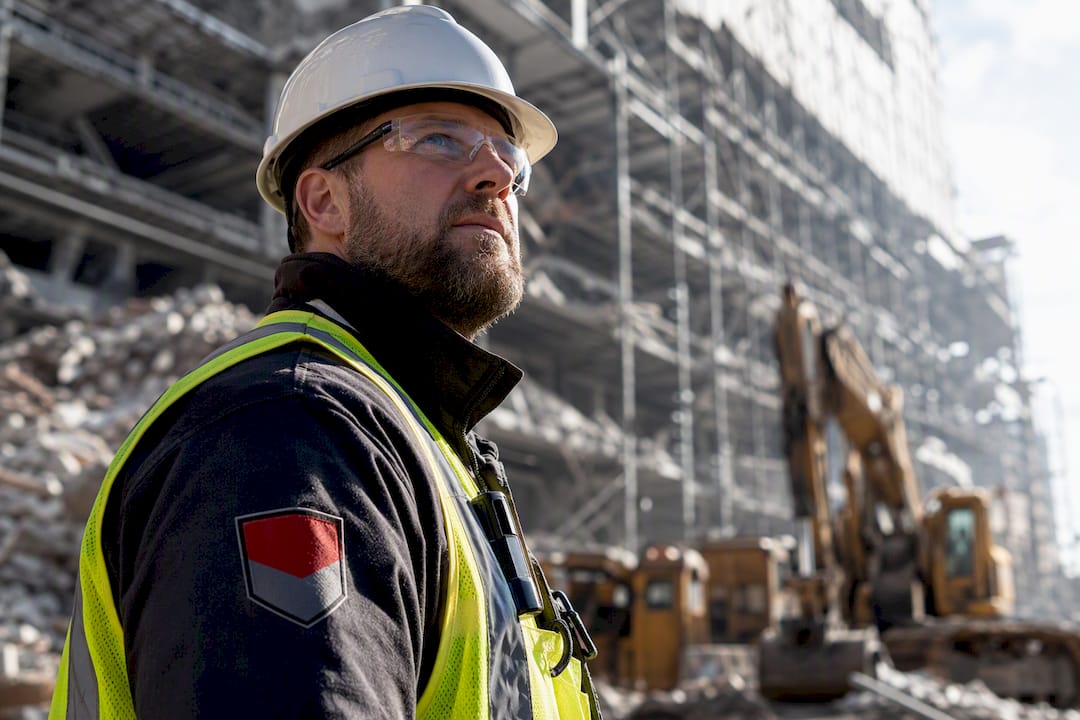
Our OSHA and asbestos abatement certifications aren’t separate from our field operations. Every job carries documented JHAs and toolbox talk logs, maintained alongside the engineering survey, so procurement teams get the full record rather than a card and a handshake.
If you’re prequalifying contractors for a demolition or excavation project, request our documentation package directly through Cornelius Wrecking before you finalize a bid.
— Zach
Sources
Planning a demolition or excavating project?
Get a fast, no-obligation quote from Cornelius Wrecking.
Request a Quote