Refinery Demolition Roadmap for Project Managers: OSHA, EPA Controls
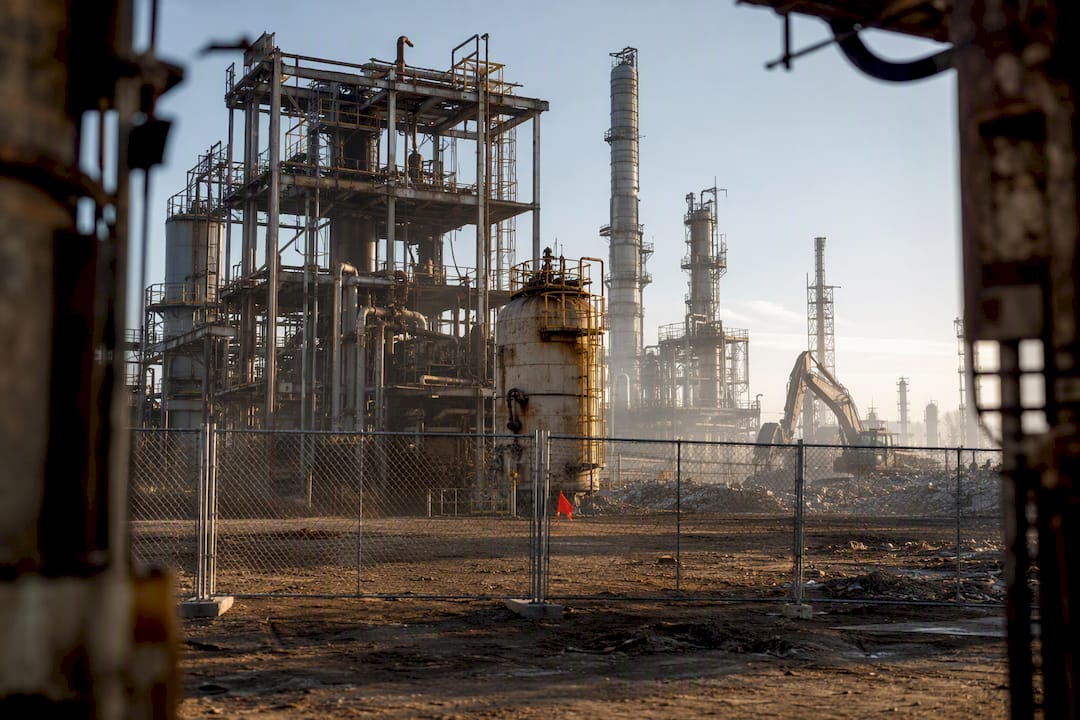
Refinery demolition is a staged program of decommissioning, hazardous-material abatement, mechanical dismantling, and site remediation, governed by a written engineering survey and formal clearance checkpoints at every handover. Success means zero unplanned collapses, zero uncontrolled releases, and a documented chain from purge log to final site certification. The anchor is OSHA 29 CFR 1926.850, which requires that survey before a single cutting torch or excavator touches steel.
TL;DR:
- Contractors must produce a detailed engineering survey and work method statements before any dismantling work begins to ensure safety and compliance.
- Hazardous material removal, including asbestos, PCBs, and mercury, requires documented disposal and specific sequencing like de-gassing and nitrogen blanketing.
- Cold cutting is the preferred demolition method near residual hydrocarbons to avoid ignition risks, while induced collapse is only viable with proven safety measures.
- Managing work in active refinery environments necessitates clear communication, hot-work permits, and a designated competent person with stop-work authority.
- Early planning of utility isolation, hazard abatement, and scrap segregation reduces delays, cost overruns, and safety risks during refinery demolition.
Table of Contents
- What Are the Main Phases of the Refinery Demolition Process?
- What Planning and Engineering Controls Come Before Demolition Starts?
- How Is Hazardous Material Removed Before Demolition Begins?
- Which Demolition Technique Fits Which Structure?
- How Do You Manage Safety When Adjacent Units Stay Live?
- How Is Waste and Scrap Handled Through to Final Handover?
- What Should You Demand From a Refinery Demolition Contractor?
- A Project Manager’s Field Checklist
- Get a Site Assessment From a Nationwide Refinery Demolition Contractor
- Sources
What Are the Main Phases of the Refinery Demolition Process?
A refinery does not come down in one motion. It comes down in six overlapping stages, each with its own approvals and its own crew mix.
- Site establishment: mobilization, utility mapping, security fencing, and setting up decontamination and staging zones.
- Decommissioning and purging: cold circulation, warm circulation, degassing, and nitrogen blanketing to strip hydrocarbons from vessels and piping.
- Hazardous-material abatement: asbestos, PCBs, mercury, and pyrophoric scale removed and disposed of under documented chain of custody.
- Mechanical dismantling: cold cutting, piece-small and piece-large removal, crane lifts, and, in select cases, induced collapse.
- Scrap processing and remediation: segregation, recycling, soil sampling, and remediation of contaminated ground.
- Handover: final inspections, certifications, and release of the site to the owner or next contractor.
These phases overlap constantly. A refinery with live adjacent units might purge one process train while dismantling a shut-down unit fifty yards away, which forces sequencing changes around utility isolation and inventory drawdown. A large complex unit can take weeks just to degas safely under monitored flare conditions, and that clock starts before any steel comes down. Timeline drivers worth building into your schedule include tank inventory levels at contract signing, the number of confined-space entries required for internal cleaning, and whether the site still has active permits from prior operations that need closure first.
What Planning and Engineering Controls Come Before Demolition Starts?
Nothing gets torched or dropped until the paperwork catches up with the plan. OSHA’s demolition standard requires a written engineering survey by a competent person, and that document has to stay on site for the duration of the job, not filed away in a corporate office.
- Engineering survey: documents the condition of walls, floors, and structural members, and identifies any elements likely to collapse unexpectedly during the work, per 29 CFR 1926.850.
- Work method statements and job hazard analyses: task-level breakdowns covering equipment, sequencing, and stop-work triggers.
- Battery limits and permit-to-work systems: define exactly where the demolition contractor’s authority starts and where the owner’s operating unit still controls the boundary.
- Utility isolation and 811 verification: confirms underground and overhead lines are dead, tagged, and cleared before excavation or mechanical work begins.
- Structural sign-off for induced collapse or heavy lifts: engineering calculations covering lift studies, rigging plans, and sequencing approval.
The OSHA Technical Manual treats these as the baseline, not the extra credit.
Pro Tip: Ask any bidder to produce a sample engineering survey and a sample WMS from a past refinery job before you sign anything. If they can’t show you paperwork, they haven’t done the work at the scale you need.

How Is Hazardous Material Removed Before Demolition Begins?
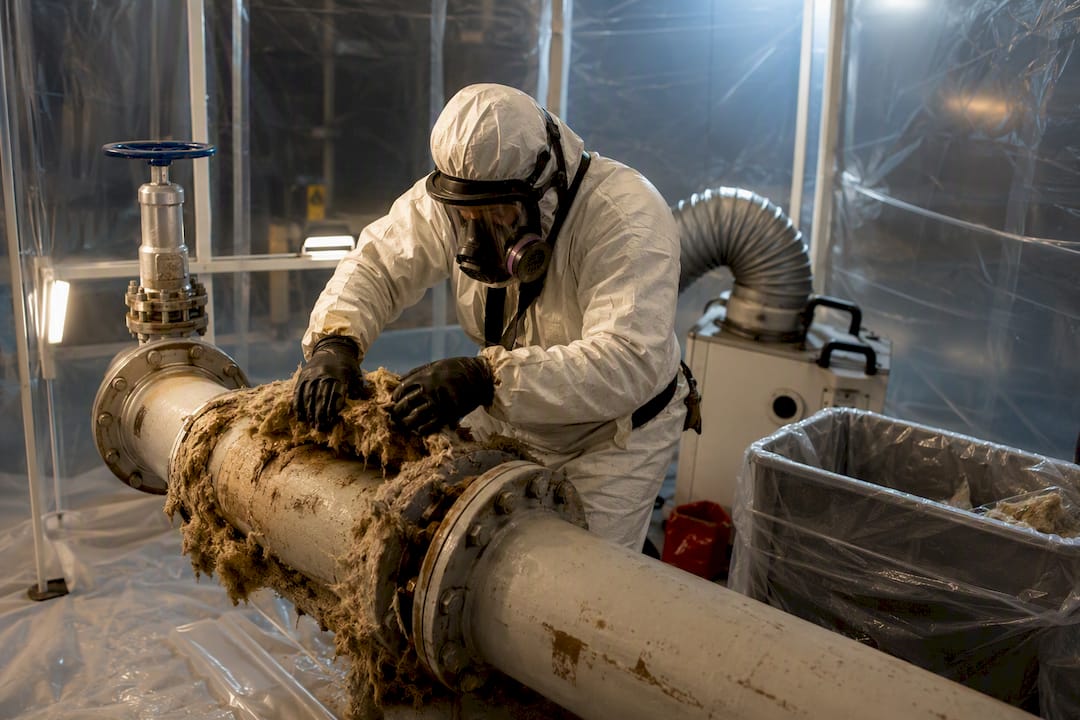
A refinery carries decades of accumulated contaminants, and none of them come out through a single process. Hydrocarbons, asbestos insulation, PCB-laden transformers and capacitors, mercury from old instrumentation, and pyrophoric iron sulfide scale inside vessels all need distinct control measures, and mixing up the sequence is how workers get hurt.
Decontamination of process units typically follows a set order: cold circulation to move bulk liquid hydrocarbon out, warm circulation to loosen residual film, then degassing to flare under monitored conditions, followed by nitrogen blanketing to inert the vessel before anyone opens it up. This sequencing shows up repeatedly in EPA-reviewed flaring plans from major decommissioning projects, and skipping a step is how a “cleaned” vessel turns out not to be.
- Asbestos, mercury, and PCBs require professional extraction and documented disposal, a requirement AFPM’s decommissioning guidance treats as a precondition for demolition, not a parallel task.
- Pyrophoric scale needs wetting or inert-gas control before vessel entry, since it can ignite spontaneously on contact with air.
- Every load leaving the site needs chain-of-custody paperwork tying it to a licensed disposal facility, with certificates retained for the project file.
A technique like hydroblasting handles a lot of the interior cleaning work between the purge and the abatement stages; industrial hydroblasting methods can strip scale and residue from vessel walls without introducing a spark source, which matters enormously in a hydrocarbon-saturated environment.
Which Demolition Technique Fits Which Structure?
Method selection depends on what you’re taking down, what’s next to it, and how much hydrocarbon residue might still be lurking in the steel. Cold cutting is the default preference across petrochemical sites because it avoids the ignition risk that comes with hot work in an environment where explosive atmospheres can linger in pockets even after purging, a preference reinforced throughout OSHA’s technical guidance.
- Cold cutting (shears, saws, wire): slower, but eliminates spark ignition risk near residual hydrocarbons.
- Mechanical piece-small removal: methodical, section-by-section takedown for congested pipe racks and pump alleys.
- Piece-large removal with crane lifts: faster for open structures like columns and separators, but demands rigging engineering and a clear lift path.
- Controlled induced collapse: fastest for tall, isolated structures like stacks, but only viable with documented vibration testing, a proven fall zone, and confirmed clearance from adjacent utilities.
Tanks generally come down through mechanical disassembly from the top ring down, since internal residue makes cutting near the base riskier. Columns and stacks are the structures where induced collapse gets considered, but only after structural calculations confirm the fall zone, commonly set at 1.5 times the structure’s height, and vibration limits protecting nearby foundations and buried lines. Pipe racks almost always go mechanical, piece by piece, because they run through too many active zones to risk a large uncontrolled drop.
How Do You Manage Safety When Adjacent Units Stay Live?
Refinery demolition rarely happens on an empty site. Most projects run alongside operating units, which means the demolition plan has to slot into the refinery’s existing simultaneous operations (SIMOPS) framework, not run as a bolt-on activity managed separately.
- Build a stakeholder communication matrix that names who signs off on hot work, who controls confined-space entry permits, and who gets notified before any lift near an active unit.
- Enforce PPE and fall protection standards matched to the highest-risk task on site that day, not the average task.
- Require hot-work permits for every spark-producing activity, with a fire watch posted and gas testing repeated at intervals, not just at the start of a shift.
- Assign a documented competent person whose sign-off authority is written into the permit-to-work system, matching the standard set out in industry decommissioning literature on SIMOPS integration.
Pro Tip: If your contractor can’t name the person who holds “stop work” authority on day one, that’s the moment to pause the contract, not day thirty.
How Is Waste and Scrap Handled Through to Final Handover?
Material coming off a refinery site splits fast into categories, and sloppy segregation at the landing zone creates disposal headaches downstream. Ferrous and non-ferrous scrap gets separated for recycling, contaminated soil gets sampled and routed to remediation, and anything hazardous follows its own documented disposal chain, not the general scrap stream.
- Segregate scrap by grade at the point of removal, not later at a central yard.
- Route contaminated soil through sampling before deciding between onsite treatment and offsite disposal.
- Track every transport load with manifests tying it to a permitted receiving facility.
- Reserve final walkthrough sign-off until utility caps, grading, and erosion controls are verified against the remediation plan.
Large-scale conversions, including the Philadelphia refinery redevelopment, show how much value recovery matters at this stage. High recycling rates offset disposal costs meaningfully when scrap segregation happens early rather than as an afterthought. Handover closes with clearance certificates, as-built surveys, and a documentation package the site owner can hand to insurers, regulators, or the next contractor without gaps.
What Should You Demand From a Refinery Demolition Contractor?
Not every demolition contractor is set up to handle a refinery. The certifications and equipment fleet matter, and OSHA and asbestos abatement certifications are central to what separates a qualified refinery contractor from a general demolition outfit. Handling hazardous materials safely on an active energy site requires that documented capability, not just heavy equipment.
Before you sign a contract, require:
- A sample engineering survey deliverable from a comparable prior job.
- A certified abatement plan naming the licensed disposal facilities to be used.
- An equipment list matched to your specific structures (tanks, columns, pipe racks).
- A documented safety record with incident rates, not just a claim of “safety first.”
- Schedule milestones tied to permit approvals, not just calendar dates.
Each item maps directly to the trust signals covered above: the written survey, the WMS and JHAs, and the clearance checkpoints that gate handover. Cornelius Wrecking builds proposals around exactly this documentation trail.
A Project Manager’s Field Checklist
Five things I’d verify in the first meeting with any bidder: the engineering survey deliverable, the abatement disposal chain, the equipment list matched to your actual structures, a real incident rate (not a slogan), and named permit-to-work authority. Most delays trace back to one of two causes: incomplete utility isolation discovered mid-job, or hazardous material found that wasn’t scoped in the original survey. Build contingency time for both. Projects that front-load the survey and abatement planning tend to hit their dismantling schedule; the ones that rush past planning almost always pay for it later in change orders.
— Zach
Get a Site Assessment From a Nationwide Refinery Demolition Contractor
When a project needs OSHA and asbestos abatement certifications paired with the equipment fleet to actually execute a refinery-scale dismantling, not just quote one, choosing an experienced contractor is critical. With crews working nationwide, some companies have handled power plant decommissioning and marine vessel dismantling alongside industrial demolition work, indicating that hazardous-material documentation and heavy-lift experience are integral to their proposals.
A consult gets you a site assessment, a defined scope, and a realistic schedule estimate before you commit to a contract, not after. If you’re planning a refinery decommissioning, a hazardous abatement scope, or a full dismantling program, request a project quote from Cornelius Wrecking and get the engineering survey conversation started now instead of after bids are already due.
Sources
Planning a demolition or excavating project?
Get a fast, no-obligation quote from Cornelius Wrecking.
Request a Quote