Avoid Costly Change Orders: Site Clearing Cost for Industrial Owners
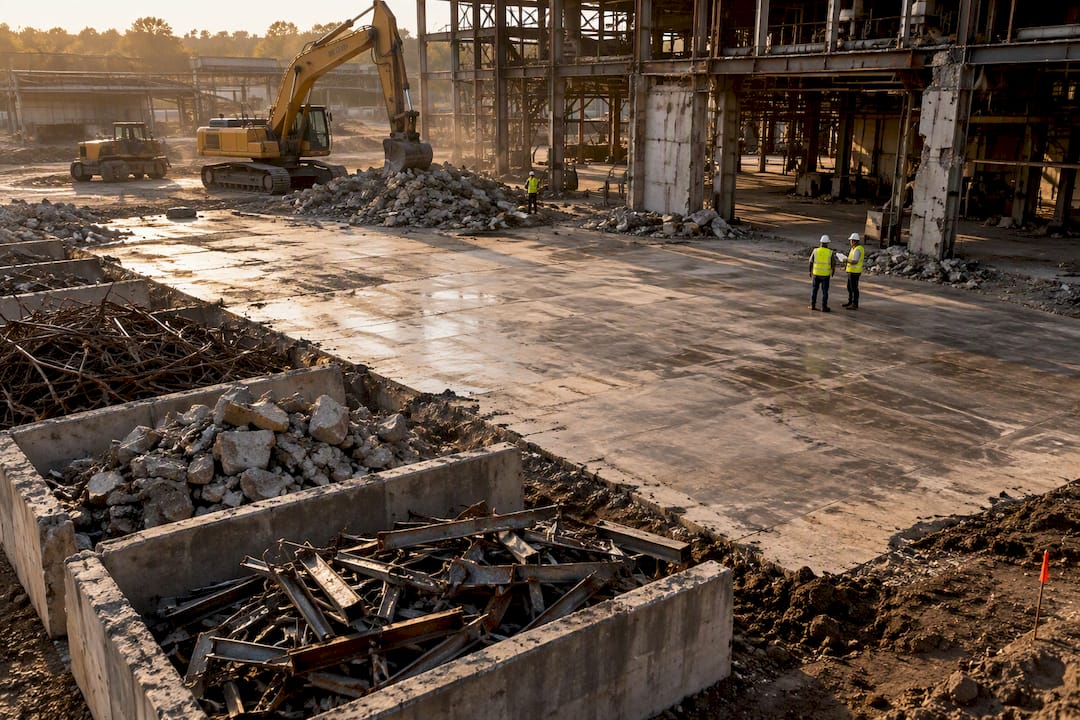
There is no universal per-acre price for industrial or commercial site clearing. Cost depends on asbestos and hazardous-material volume, demolition method, access constraints, disposal routing, and it can range from a few dollars a square foot to multimillion-dollar totals on complex sites. Budget by line item, not by acreage: require an asbestos survey, an OSHA-style engineering survey, and an itemized bid that separates survey, abatement, demolition, hauling, disposal, and restoration into distinct priced categories.
TL;DR:
- Bids should be broken into separate line items for survey, abatement, demolition, hauling, disposal, and restoration to ensure transparency and facilitate accurate comparisons.
- The total cost can vary widely depending on asbestos quantity, access restrictions, and site-specific risks, often pushing projects into millions of dollars.
- Regulatory requirements demand a minimum of 10 working days’ notice for asbestos notifications, with schedule delays resulting from late filings or scope changes.
- Including an asset-level hazardous-material register, containment plans, and disposal documentation in bids can prevent costly change orders and legal issues.
- An itemized proposal with clear scope, documentation, and unit prices helps owners avoid common pitfalls like underestimating environmental and structural risks.
Table of Contents
- What Line Items Make Up Site Clearing Cost?
- What Regulatory and Site Factors Push Cost Up?
- How Do You Get a Comparable Site-Clearing Estimate?
- When Do EPA and OSHA Deadlines Affect Mobilization?
- What Does a Compliant Industrial Proposal Actually Look Like?
- Get an Itemized Site-Clearing Proposal Before You Compare Bids
- Sources
- FAQ
What Line Items Make Up Site Clearing Cost?
A proposal that lumps everything into one lump-sum number is nearly impossible to verify. Owners who understand the standard cost buckets can read competing bids side by side and spot the gaps before they become change orders.
Structure demolition is priced around means and methods. Mechanical demolition with excavators and shears costs differently than selective deconstruction near occupied buildings, and sequencing (which structure comes down first, what stays standing to support utilities) changes crew size and equipment hours.
Asbestos and hazardous-material abatement is its own-regulated work package: survey, containment, wetting, bagging, a licensed transporter, and disposal facility fees all get priced separately from the demolition itself. The EPA’s Asbestos NESHAP program requires inspection and emission controls before regulated materials can be disturbed, which is why abatement almost always shows up as its own line rather than buried inside a demolition rate.
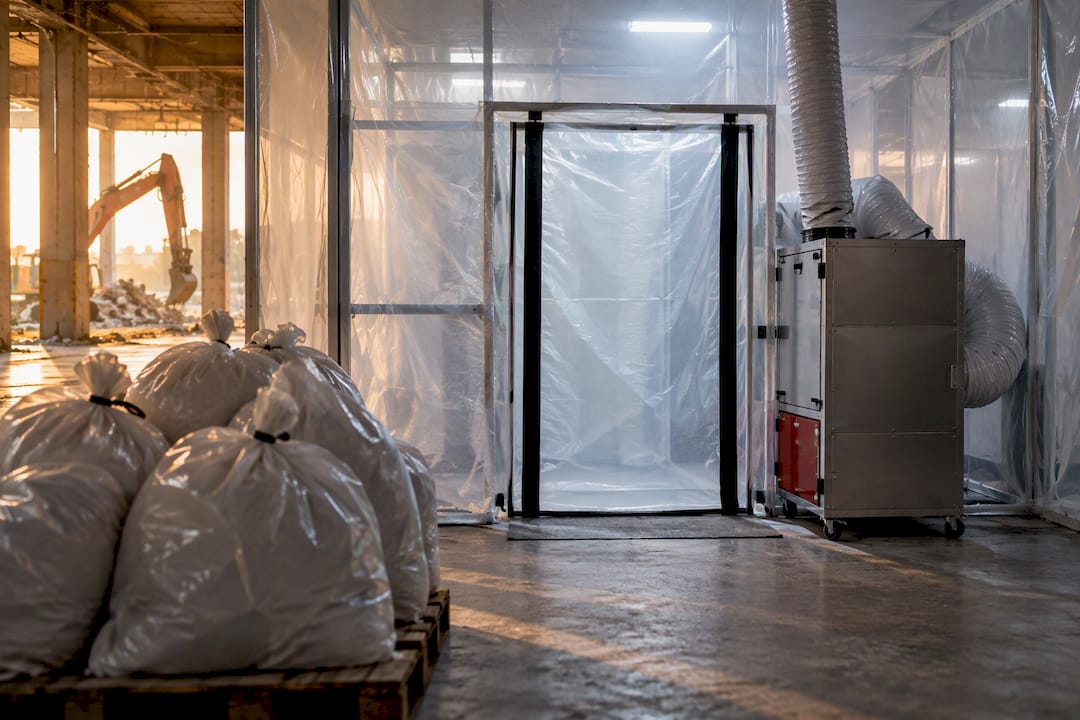
Concrete and asphalt tear-out is typically quoted per square foot or cubic yard, with reinforced slabs and rebar-heavy foundations costing more to cut and remove than plain flatwork.
Hauling and disposal scales with cubic yards moved, landfill tipping fees, and whether any soil or debris requires special-waste routing rather than standard construction debris disposal.
Site restoration covers infill, compaction, grading, erosion controls, fencing, and the acceptance criteria that determine whether the site is actually ready to hand to the next contractor.
A public example illustrates how fast these categories add up. A Pennsylvania probable-cost estimate for a correctional facility priced asphalt and concrete removal at a typical per-square-foot rate and certain tunnel and slab demolition at a typical per-cubic-yard rate, on top of separate lines for hauling, grading, and infill. That single document is a useful template for what an itemized bid should look like, not a rate card for your project.
- Structure demolition (means, methods, sequencing)
- Asbestos and hazardous-material abatement (survey through disposal)
- Concrete and asphalt tear-out (per square foot or cubic yard)
- Hauling and disposal (per cubic yard, plus tipping and special-waste fees)
- Site restoration (infill, grading, erosion control, fencing)
What Regulatory and Site Factors Push Cost Up?
Price differences between two bids for the same building almost always trace back to risk, access, and how much testing was done before either contractor priced the job.
OSHA requires a competent person to complete a written engineering survey before demolition, covering structural conditions, adjacent structures, and hazardous systems, and any suspected hazardous equipment has to be tested and purged before work starts. A survey requirement like this is where allowances for structural risk, occupied neighboring assets, or unknown process piping get built into a bid.
On the environmental side, EPA NESHAP notification rules tie asbestos quantity and classification directly to method and fee. More regulated material means more containment, more air monitoring, and a longer schedule.
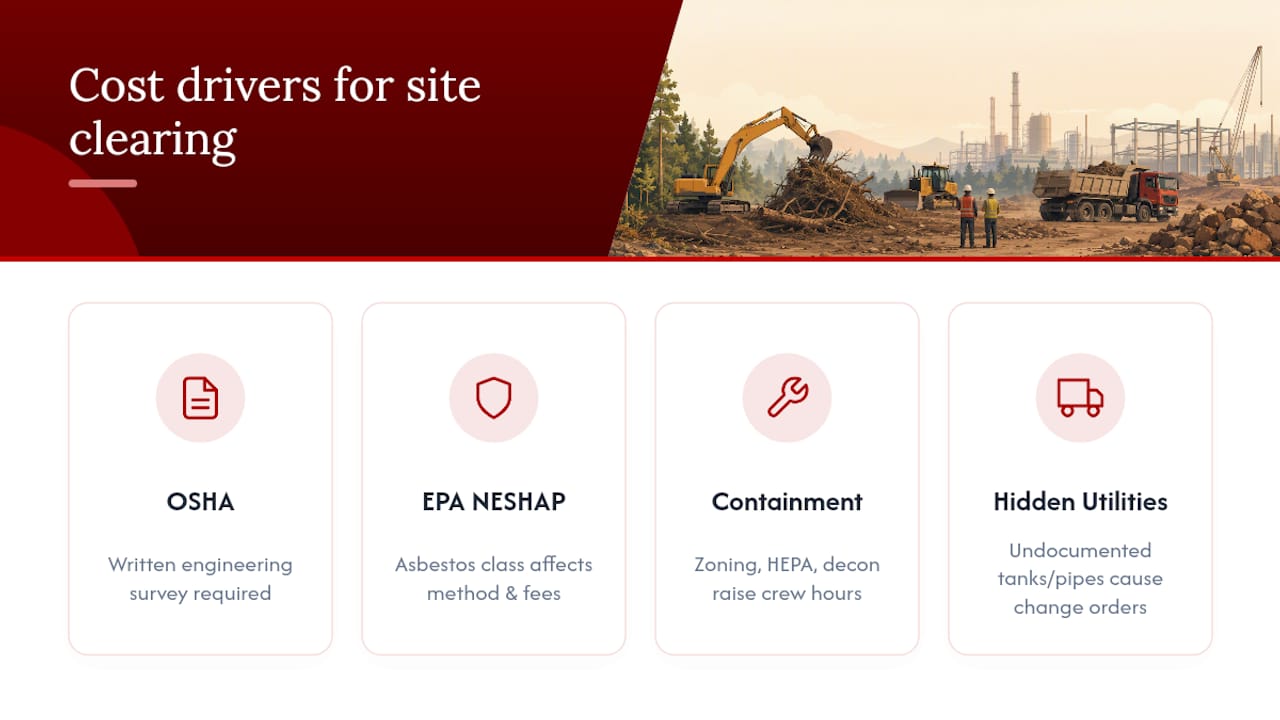
Containment and phasing add real cost, too. Subdividing a building into zones, running HEPA filtration and decontamination units, and staging work so occupied areas stay isolated all increase crew size and equipment hours, and that cost should be visible in the estimate rather than hidden in a markup.
Undocumented tanks, buried pipes, or unknown residues are the single biggest source of change orders on industrial sites. A hazardous-material register built asset by asset, rather than a rough visual estimate of “affected square footage,” gives a far more defensible cost basis.
Dust control matters more than most owners assume. NIOSH exposure studies found that water suppression reduces airborne dust during demolition but does not eliminate exposure, meaning respirable dust and silica can still exceed limits even on jobs that look well controlled. That is why monitoring and cleanup belong in the priced scope, not treated as a free safety courtesy.
Pro Tip: Ask every bidder to price the hazardous-material register by named disposal facility and transporter, not by a lump “environmental allowance.” Vague allowances are where six-figure surprises hide.
How Do You Get a Comparable Site-Clearing Estimate?
Bids that aren’t structured the same way can’t be compared fairly, no matter how detailed each one looks on its own. Build the RFP so every contractor prices the same scope, in the same categories.
- Require separate, itemized pricing for survey, abatement (naming the transporter and disposal facility), demolition, tear-out, hauling and disposal, dewatering, infill, grading, and restoration.
- Provide bidders with process diagrams, utility maps, Safety Data Sheets, prior environmental reports, and shutdown records. This step alone materially reduces the unknown-condition allowances contractors build into refinery and plant decommissioning bids.
- Ask for documentation deliverables up front: a written engineering survey, a hazardous-material register broken out by asset and quantity, a containment layout with air-clearance criteria, and disposal receipts once work is complete.
- Include unit prices for common items (per cubic yard hauling, per square foot tear-out) and a change-order rate table, so cost overruns get priced at agreed rates instead of negotiated after the fact.
- Favor bids that tie acceptance criteria to specific deliverables. “Site graded to plan elevation with compaction test results attached” beats “site restored” every time.
Attach a checklist to the RFP itself so nothing gets left to interpretation:
- Site plans and utility maps
- Any existing environmental or asbestos survey reports
- SDS files for known process chemicals
- Target start date and any regulatory notification deadlines
- Required disposal documentation and transporter credentials
When Do EPA and OSHA Deadlines Affect Mobilization?
Timing drives cost more than most owners plan for. Miss a notification deadline and the whole schedule slides, often at the worst possible moment for a facility trying to hit a shutdown window.
The EPA generally requires asbestos notification at least 10 working days before removal or demolition begins, and that notification has to be revised if quantities or dates change materially after filing. The sensible sequence runs survey, then notification, then abatement, then air clearance testing, then demolition, then hauling and disposal, then restoration. Skipping steps to compress a schedule usually means paying for expedited methods or accepting emergency-work pricing instead of standard rates.
- Lock quantities early, before filing notification, to avoid a revised notice
- Submit a complete notification package the first time
- Build in the 10-working-day window when setting a mobilization date
- Treat any schedule compression as a cost driver, not a free option
What Does a Compliant Industrial Proposal Actually Look Like?
Most owners who get burned on a site-clearing project weren’t overcharged. They were underscoped. The bid they accepted looked cheap because it left out the engineering survey, the hazardous-material register, or the containment plan, and all three showed up later as change orders with no leverage to negotiate.
A contractor holding OSHA and asbestos abatement certifications and running industrial demolition and site clearing with its own crew and equipment can manage hazardous-material removal in-house, eliminating the need to coordinate a separate abatement subcontractor’s schedule against the demolition schedule. That single fact eliminates one of the most common sources of mobilization delay on multi-phase jobs.
A proposal worth signing includes a written engineering survey, an asset-level hazard register, a containment plan with air-clearance metrics, a named transporter and disposal facility, and documentation tied to acceptance criteria, not a vague promise of “clean site” at the end. Owners who ask for exactly that get a bid they can actually defend to a board, an insurer, or a public agency.
— Zach
Get an Itemized Site-Clearing Proposal Before You Compare Bids
Some contractors offer combined abatement, demolition, and hauling services under one contract with an OSHA and asbestos-abatement certified crew managing survey, hazard register, demolition, and disposal documentation, which can streamline scheduling and reduce change orders.
Before requesting a quote, pull together your site plans, utility and process maps, any Safety Data Sheets on hand, and a target start date. That short list alone lets Cornelius Wrecking price your job against real conditions instead of a broad contingency. The company handles commercial, industrial, and residential demolition, site clearing, asbestos abatement, concrete and asphalt tear-out, and hauling and disposal, all coordinated through one team.
For structural risk questions specific to steel-framed buildings, the engineering-survey background from Steel Frame Manufacturing Ltd is a useful reference point on structural detailing before demolition begins.
Request an itemized proposal that separates survey, abatement, demolition, hauling, and restoration into distinct line items at Corneliuswrecking, so whatever else you compare it against, you’re comparing apples to apples.
Sources
- Overview of the Asbestos National Emission Standards for Hazardous Air Pollutants (NESHAP) | US EPA
- OSHA demolition technical manual — Section 5 Construction Operations, Chapter 1
- Probable cost estimate for demolition and site clearing — Pennsylvania public document
- NIOSH demolition exposure study
FAQ
How much does site clearing cost for an industrial building?
There is no single number. Cost depends on asbestos and hazardous-material volume, demolition method, access, and disposal distance, and an itemized public estimate shows how line items like tear-out and infill can push a project into the millions. Request a proposal broken into separate categories rather than one lump-sum figure.
What is included in a site clearing checklist for owners?
A complete checklist covers an asbestos and hazardous-material survey, an OSHA-style engineering survey, itemized pricing for demolition, tear-out, hauling, and restoration, and documentation like disposal receipts and air-clearance results. Owners should also supply utility maps and prior environmental reports to bidders to reduce unknown-condition pricing.
How far in advance does asbestos notification need to be filed?
The EPA generally requires notification at least 10 working days before asbestos removal or demolition begins. If quantities or scheduled dates change materially after filing, the notification has to be revised, which can delay mobilization.
Why do two site-clearing bids for the same building come in so far apart?
The gap usually comes from scope, not price gouging. One contractor may have priced a full engineering survey, hazardous-material register, and containment plan while the other used broad allowances for the same unknowns, and those hidden gaps tend to surface later as change orders.
Does Cornelius Wrecking handle both demolition and asbestos abatement?
Yes. Cornelius Wrecking holds OSHA and asbestos abatement certifications and runs demolition, hazardous-material abatement, and site clearing with its own in-house crew and equipment. Current pricing for specific projects is available by requesting a proposal directly through Corneliuswrecking.
Planning a demolition or excavating project?
Get a fast, no-obligation quote from Cornelius Wrecking.
Request a Quote